
Homemade Organic Dairy Cow Feed Recipe
This post may contain affiliate links. Please read our disclosure policy.
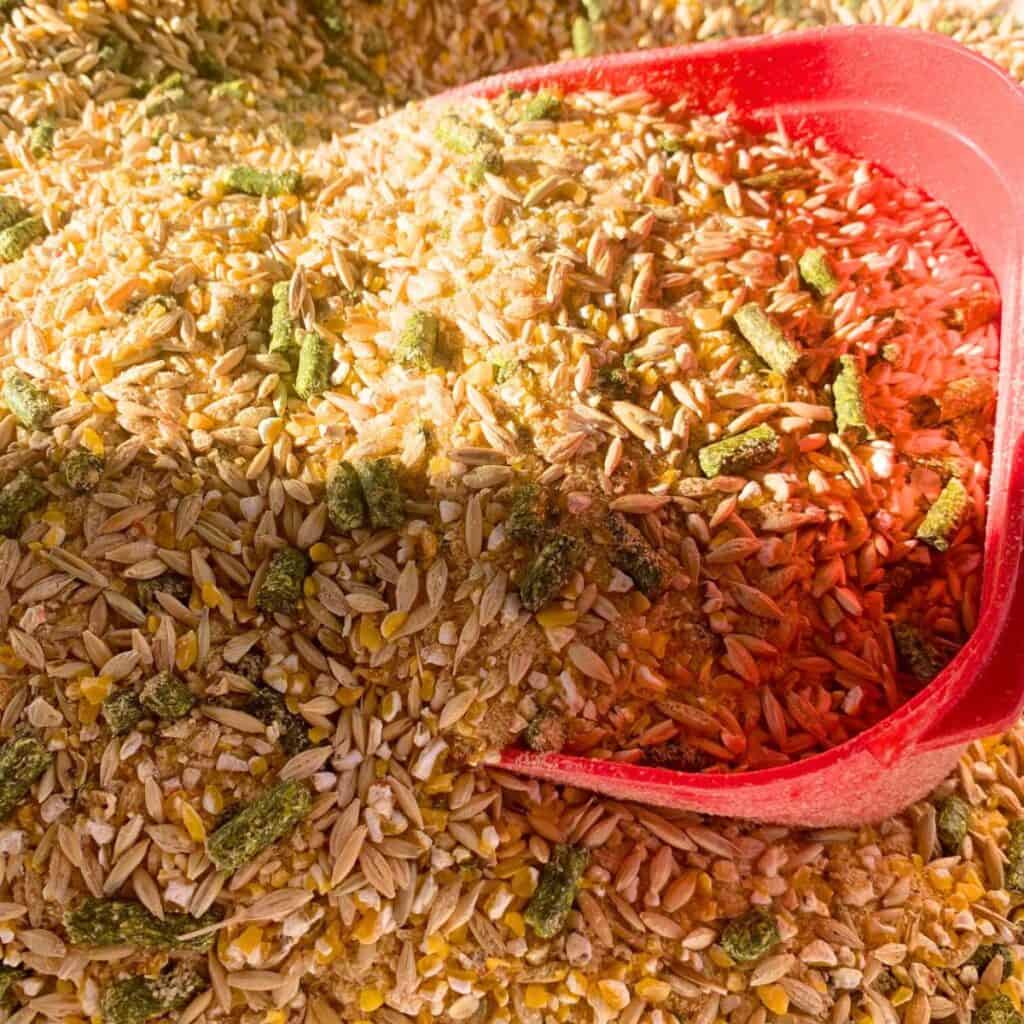
I’ll show you the five ingredients we use to make organic feed for dairy cows at home, how much we feed our cows, and how feeding grain affects milk production!
It’s no secret that I love my first family milk cow, Belle, plus the ones that came after her. They provide milk and dairy products for my family plus calves that we raise for meat.
In the Southeast where I live, it’s hard to near impossible to find organic feed for animals. Big box stores sell small bags of cow feed, but they are cost prohibitive for my family because of the quantity we would need to buy.
Most of the animal feed sold near me is not organic. And that means that they are likely laced with pesticides and herbicides. Dairy farmers use commercial feed that includes ingredients like corn silage, soybean meal, and other by-product feeds that may contain ingredients that I don’t want my cows to eat.
The only way to know for sure would be to test the food individually. And while I’m not opposed to doing that, it would be costly. So I stick with high quality organic animal feed ingredients that I buy in bulk from Azure Standard. It’s the best place that I have found to get high quality organic animal feed for a cheap price.
How to make organic feed for dairy cows at home.
This dairy cow feed recipe is so simple. And you can adjust it to suit your cow’s nutritional needs and what you can purchase.
Even using just four of the five ingredients listed below (eliminating the ground corn), we can milk one cow four times per week and not run out of dairy feed.
A lot of commercial dairy cattle like Holstein cows are bred to produce an abundant supply of milk. That said, they require a lot of cereal grains in order to stay healthy while producing the amount of milk that they were bred for.
Alternatively, homestead cows like Jersey cows don’t produce quite as much milk and can get away with just eating grass as long as your pasture is thick and lush. If your pasture is not that great, it’s a good idea to give them some grains, too.
Ingredients
I want to encourage you to make your own feed for dairy cows at home for a fraction of the cost by ordering animal feed from Azure Standard. They have food trucks that go all over the country each month, and you are likely to have a drop point near your home or farm! You can also get it delivered to your house by paying extra.
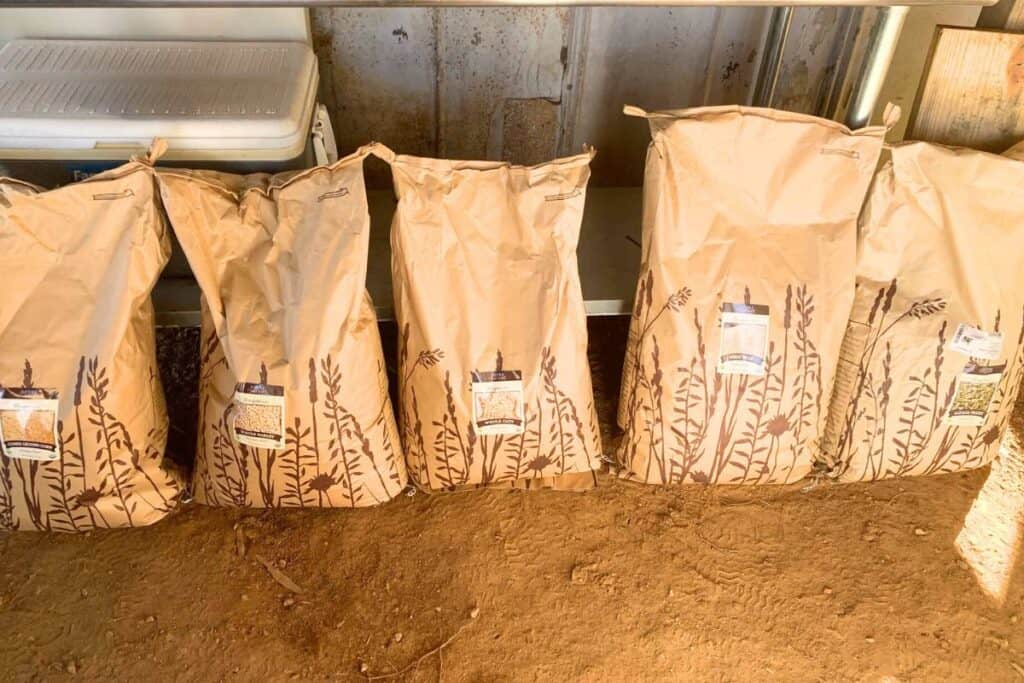
Barley – Whole barley from Azure Standard comes in 45-pound bags. It contains an outer hull that has 70 to 80 percent of TDN (total digestible nutrients) and 7 to 10 percent of digestible protein. This ingredient helps the cows produce more milk, too!
Oats – Whole oats with hulls have not had the husk (hull) removed, and it comes in 30-pound bags from Azure.
Wheat bran – Wheat bran from Azure comes in 25-pound bags. It’s the outer most covering of wheat that is left over after Azure mills their flour. It has 14 to 17 percent protein, 3 to 4.5 percent fat, and 10.5 to 12 percent fiber. The protein-rich wheat bran will help your cows produce more milk, too!
Alfalfa pellets – The larger 6mm Alfalfa pellets we get from Azure come in 40-pound bags. It’s a rich, bright green color that smells fresh. It has 16 to 21 percent protein, which makes dairy cows produce an abundant supply of milk, and 26 to 30 percent fiber. You can soak the pellets if you want, but our cows don’t have any trouble chewing or swallowing Azure’s brand. Some other brands we have tried are too hard, though, in my opinion.
Coarse ground corn – This is optional, but I like my cows to have coarse ground corn. This comes from Azure in 50-pound bags. It has 6.5 percent protein and 2 percent fiber.
The current average price for all five ingredients is $0.59/pound. That’s the lowest cost I can manage while also controlling the ingredients.
Tips
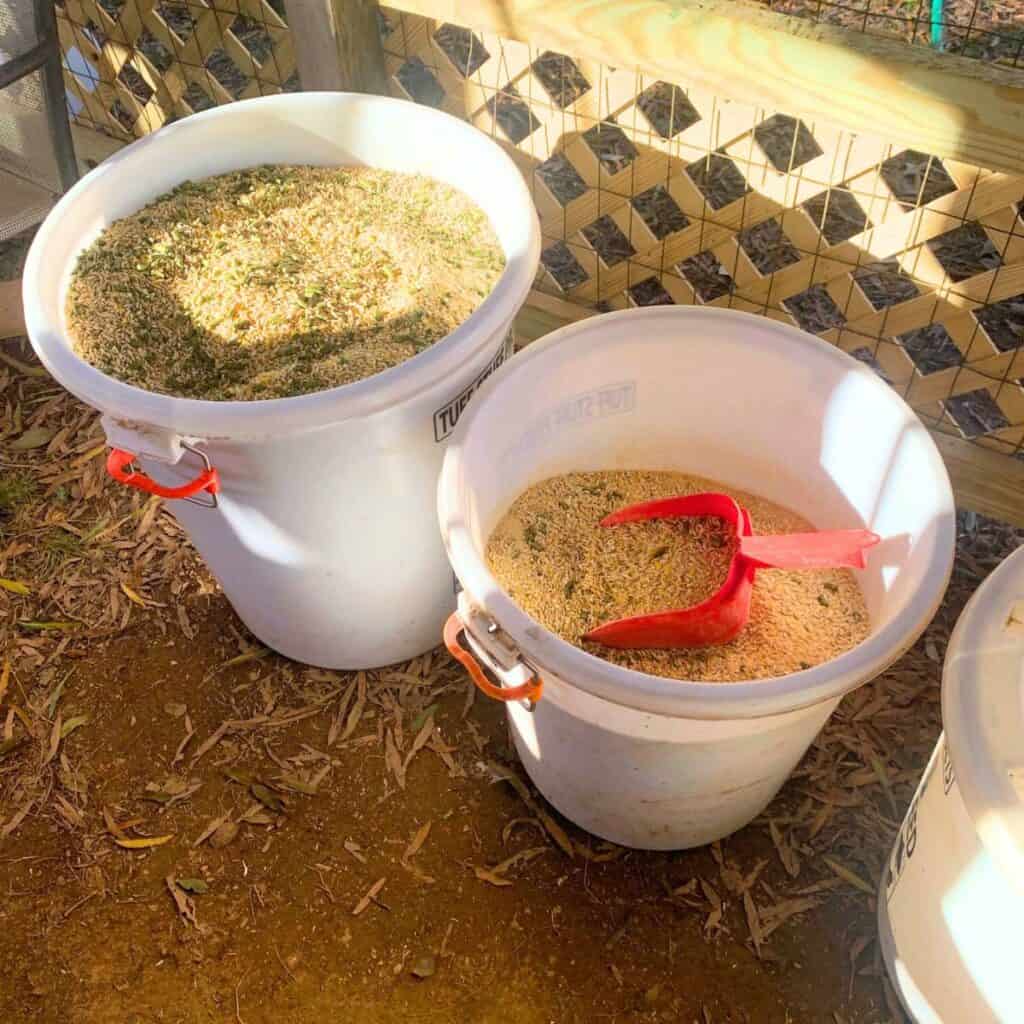
- Store your feed in the best rodent-proof container you can find. In our experience, round containers are much better at keeping rodents out than containers with corners or straight edges.
- Try to only buy what you will use up in a month or two. And make sure that you store it away from any moisture so that mold won’t start to form. You should never give your dairy cows moldy food or food infested with insects. But if that happens, your chickens or turkeys will eat the insects for you.
- One of the benefits of giving corn and other grains is that our free-range chickens will scratch through cow patties in the pasture to get small bits that were left undigested. It sounds gross but is completely natural. That’s why you find birds and cattle often grazing together. It keeps the pastures looking clean!
Tools you may need
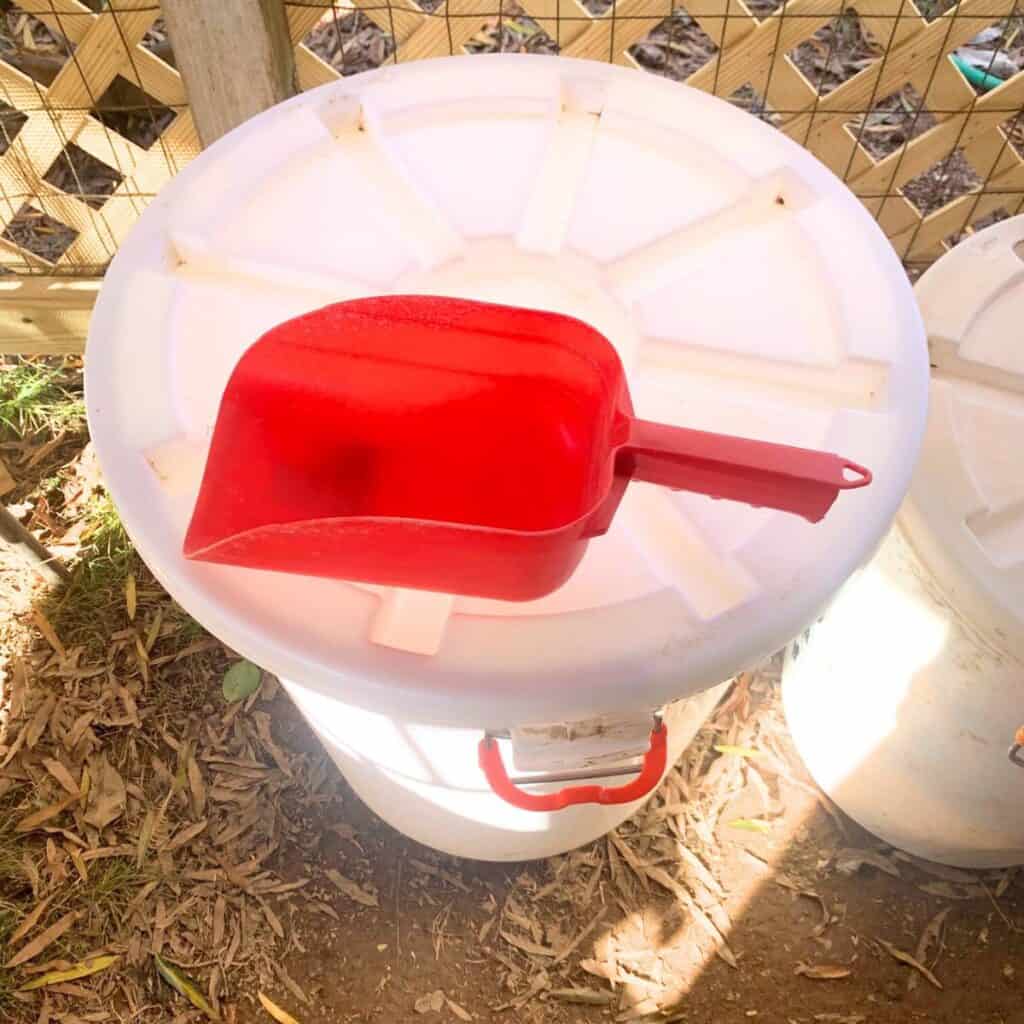
Large container with lid – I like big round tubs to store our feed in, and we use 26.5 gallon locking tubs with lids. They’re expensive but really tough. We’ve tried other options, but rats and mice are an issue where we live and they will chew holes into other storage containers to get to the grains. They haven’t been able to do that with these bins. Alternatively, you could use a metal garbage bin with lid.
Animal feed scooper – We mostly use 5-pint utility scoops but you can use 3-quart scoops, too.
Steps to make This dairy cow feed recipe
To make organic feed for dairy cows, add a mixture of organic alfalfa pellets, organic barley, organic oats with the hulls, organic wheat bran, and organic coarse ground corn (or cracked corn). See below for reasons and recipe variations.
You could give your cows straight alfalfa pellets but it will be more expensive to feed your cows in the long run. And it’s not really necessary. You’re just looking to give your cows something tasty, that increases milk production, and helps them stand still in the stanchion long enough for you to milk out your cow.
I want our dairy cows to have the best feed as a stanchion snack!
The first step in making your own dairy cow ration will be to get out all of the ingredients. I line up my feed bags near the storage containers I use.
How to easily open animal feed bags.
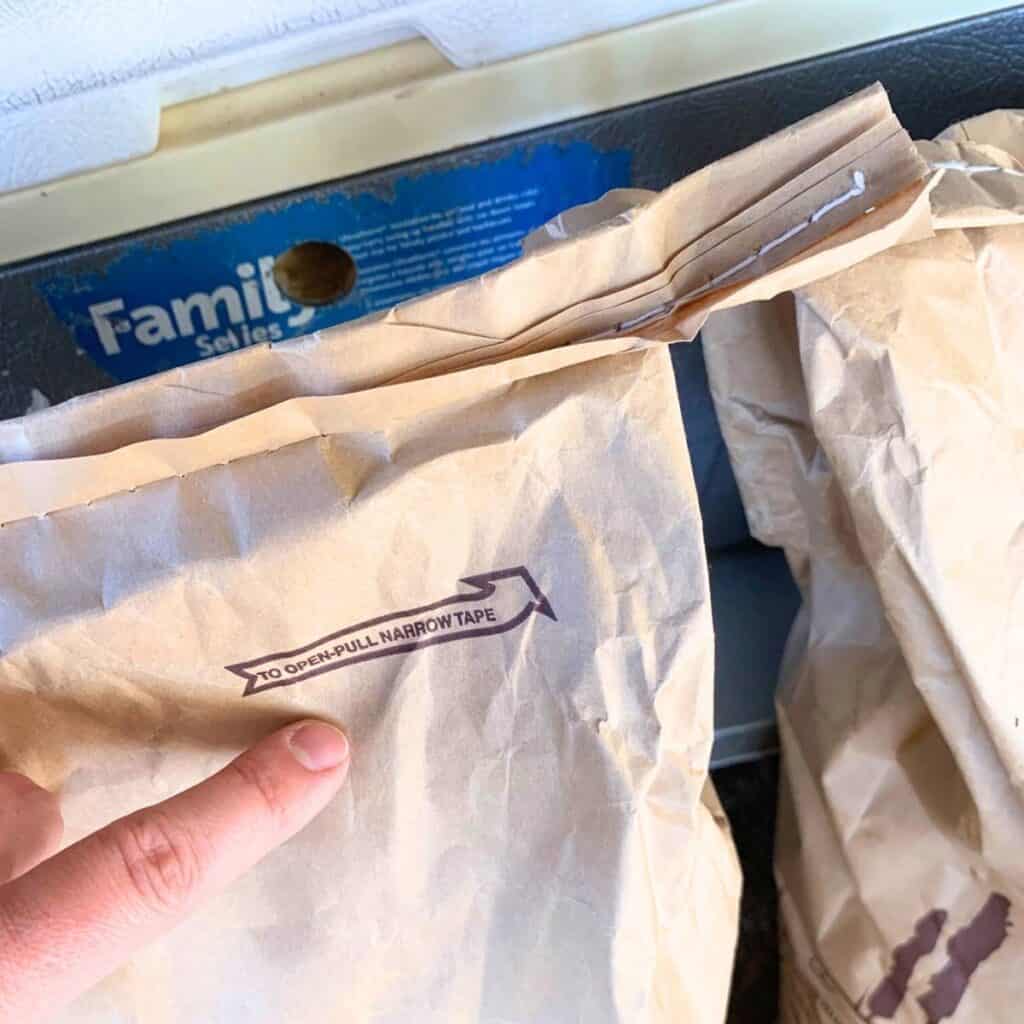
Look for a tab or tape at the top of your feed bags. Generally it’s on the upper right side.
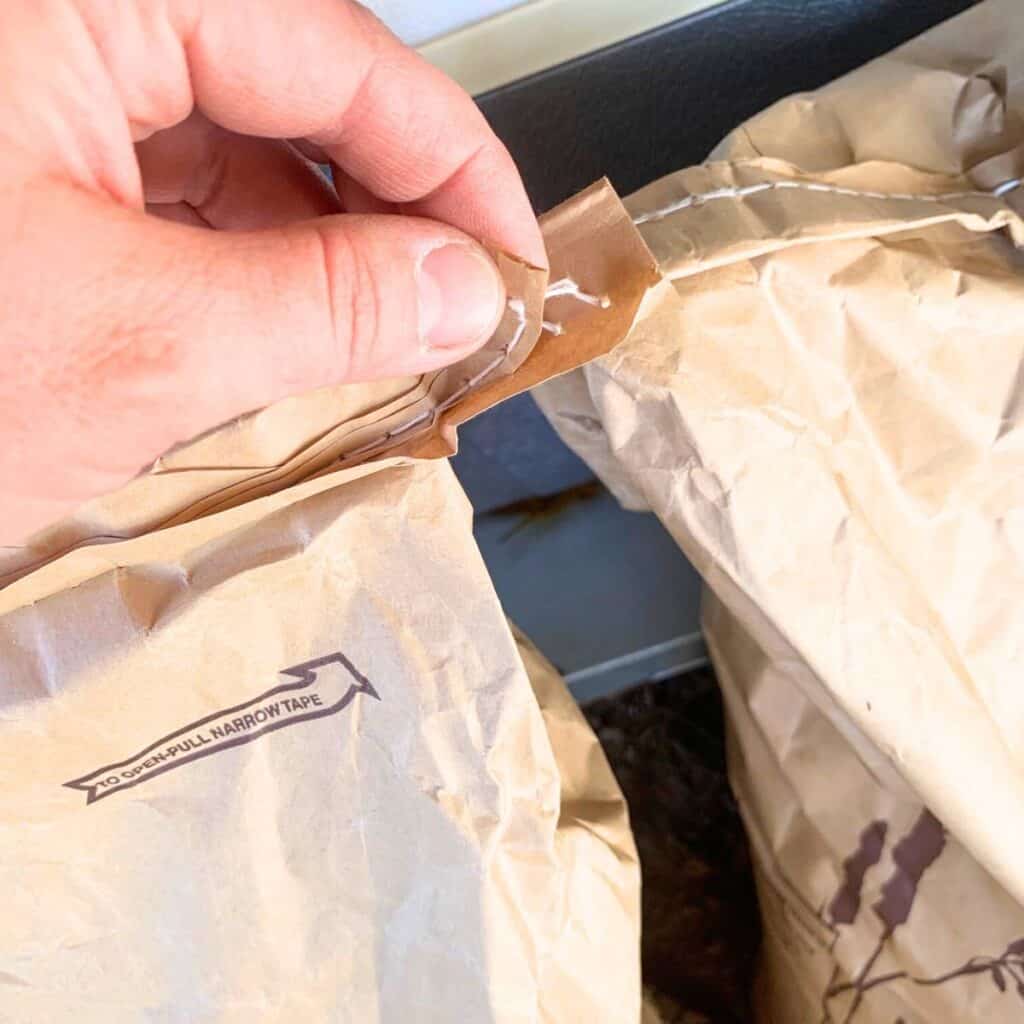
Pull the string and narrow strip of paper. It should start to unravel and will be easy to pull.
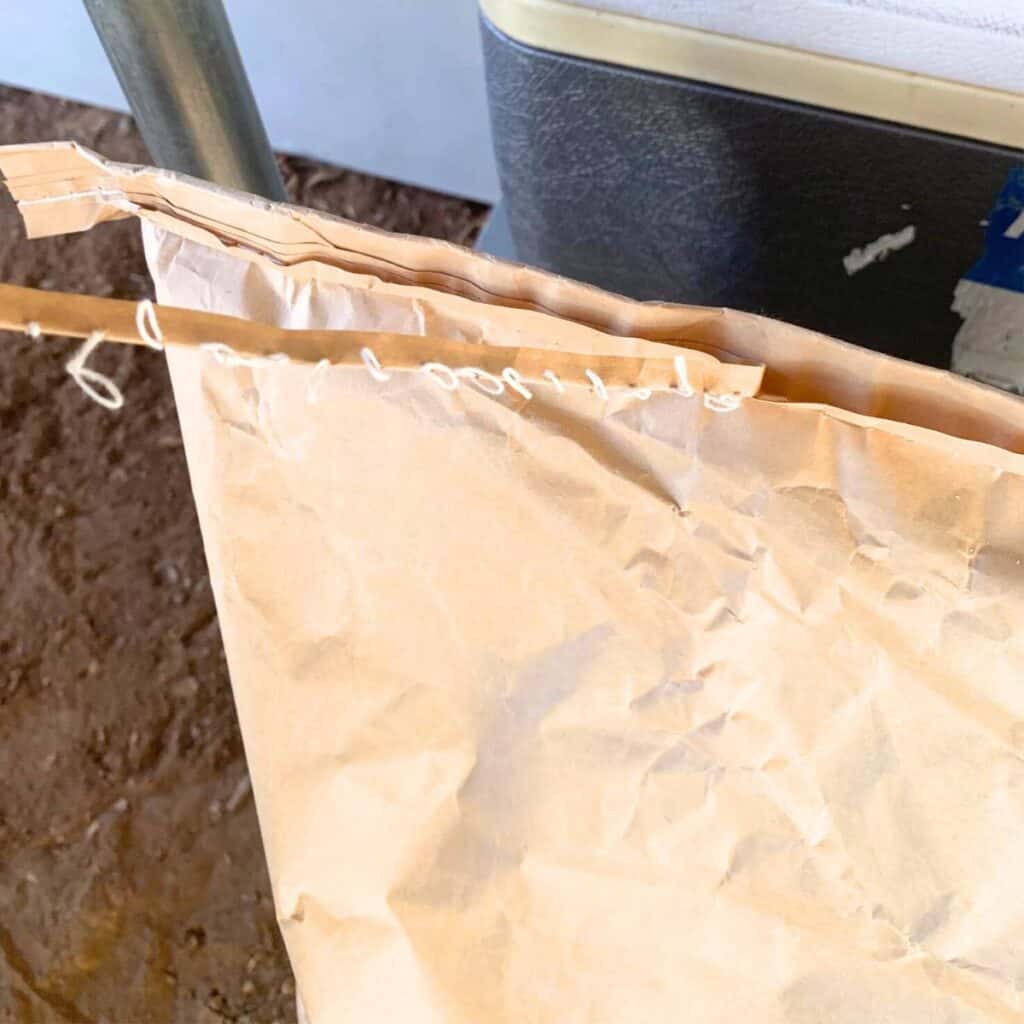
You might need both hands, but keep pulling until you get the whole thing off. Your bag should be wide open if it came with one of these easy-open narrow tapes at the top.
Quick Tip: Make sure you put the string and tape in your pocket to throw it away. The last thing you want is for your chickens or turkeys to get tangled up in the string. And It…Will…HAPPEN!
Mix the organic feed
I find it’s easiest to add the ingredients one by one to the storage container, and then mix it up with the scoop. However, if you have one or two other helpers around, each can hold a bag or two, and everyone can dump the ingredients into the bin at the same time.
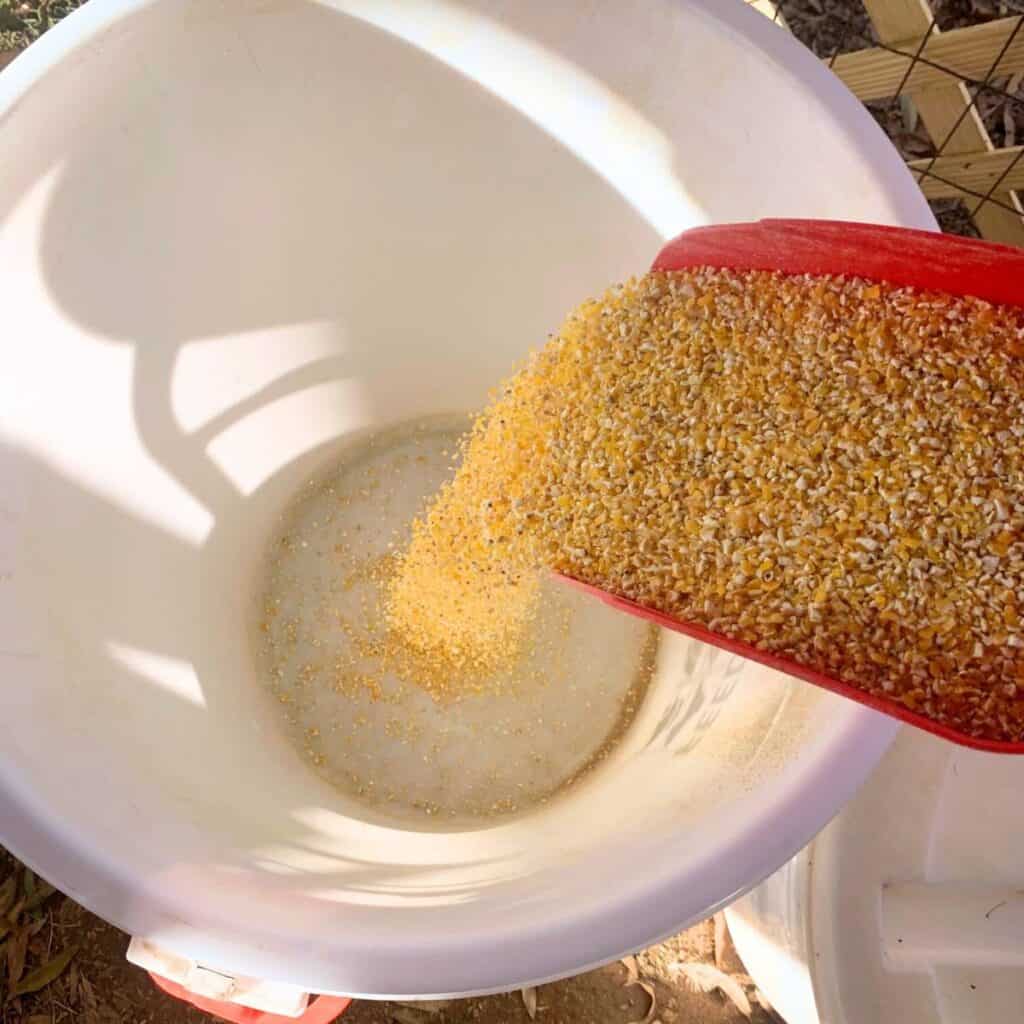
If you’re using cracked corn, add a scoop full to your storage bin.
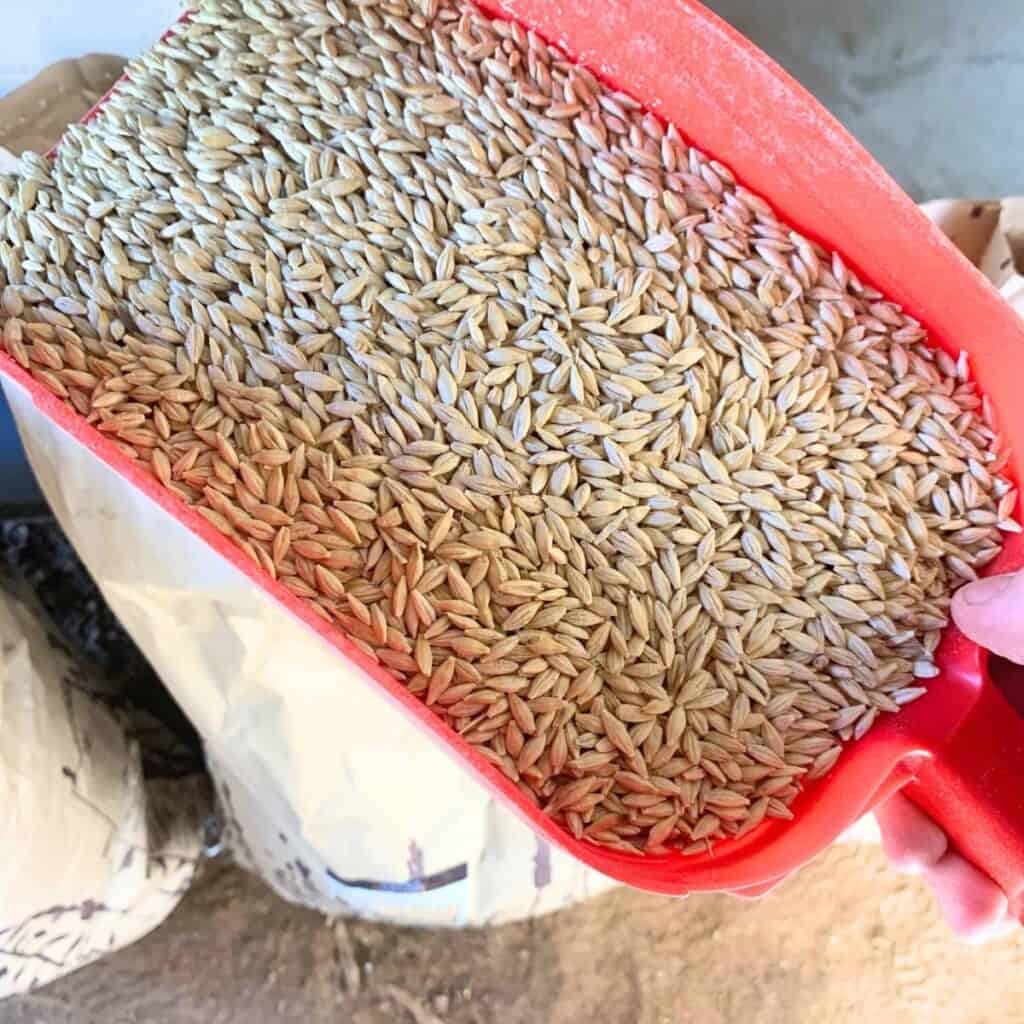
Next, add a scoop of whole barley.
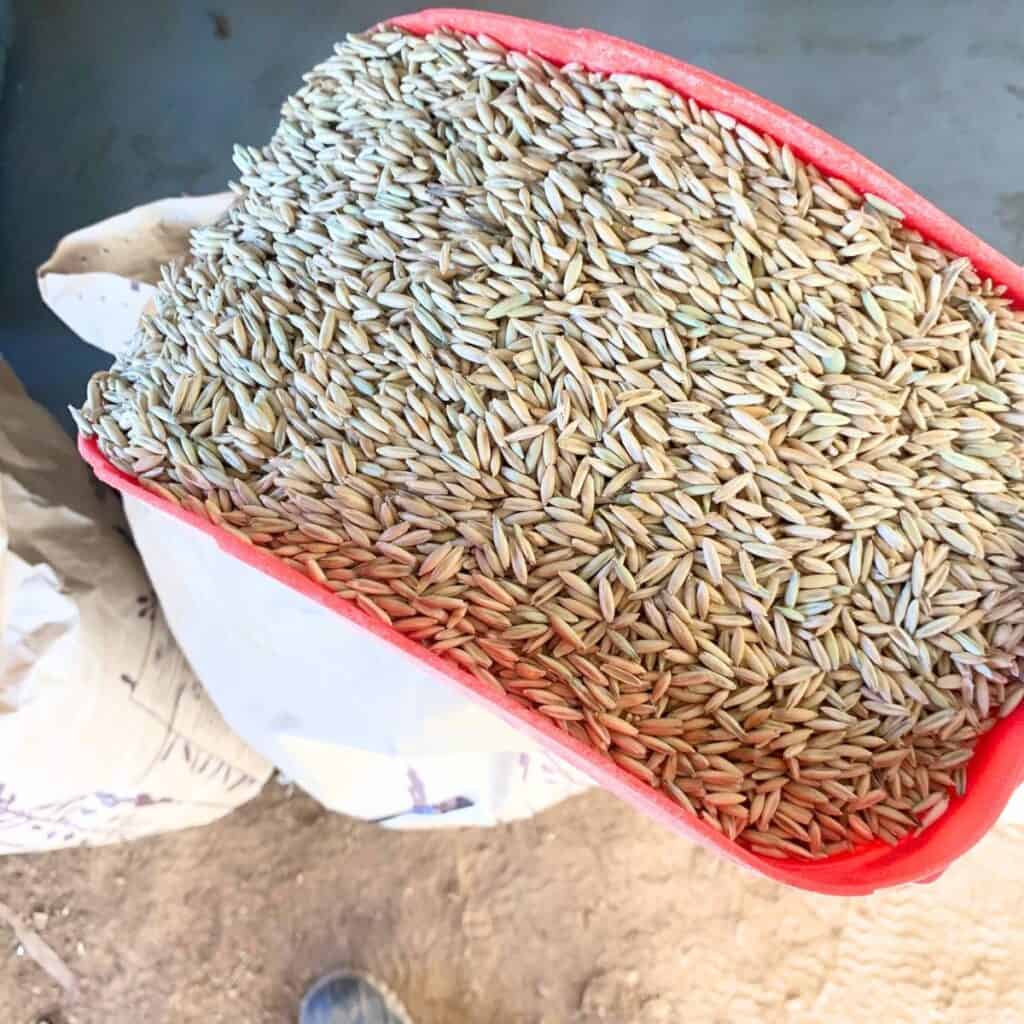
Add a bit less than a full scoop of whole oats. It will look almost identical to the barley. I find that I run out of oats too soon when I use a whole scoop since it comes in a smaller bag size than the others.
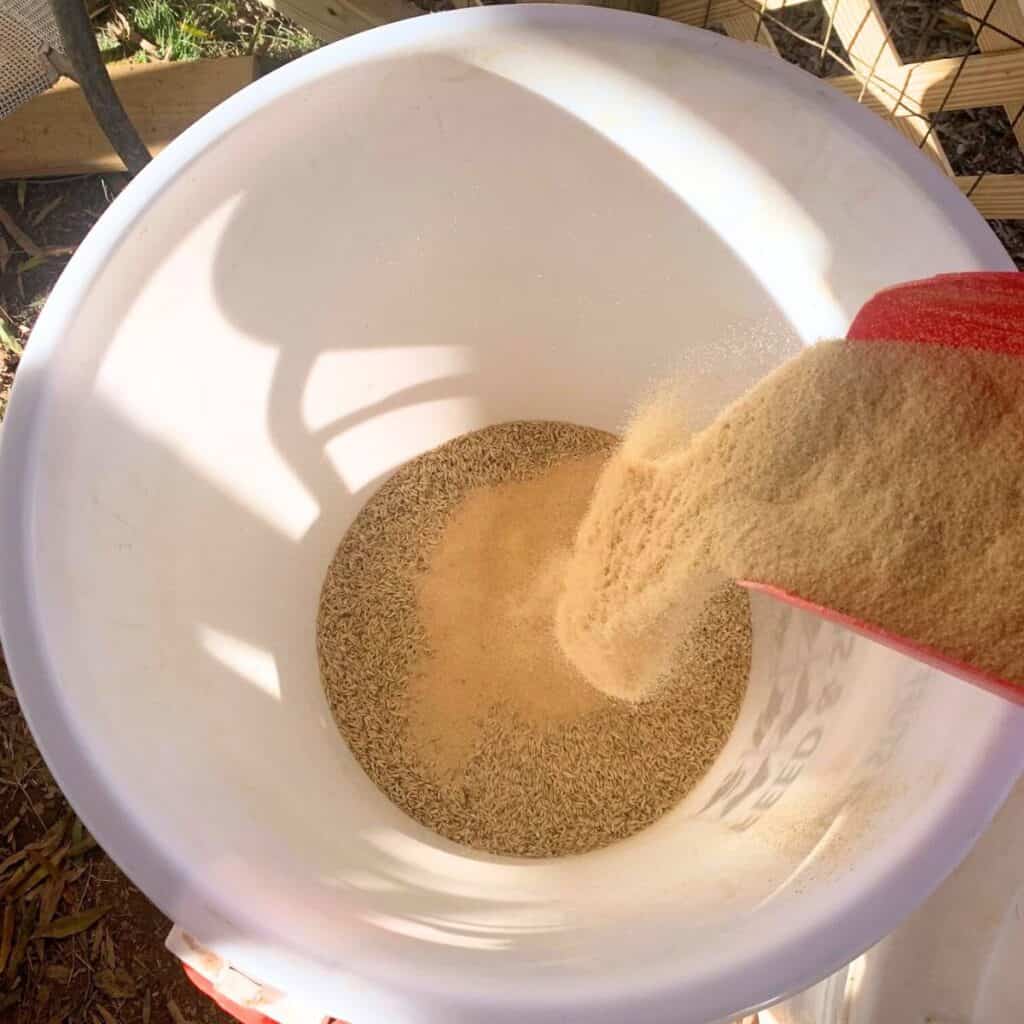
Then add the wheat bran. It’s a powder, so I usually limit it to a half scoop. That’s partially because I don’t want my final product to be too powdery, but it’s also to stretch out the wheat bran since it comes in the smallest bag size (25 pounds).
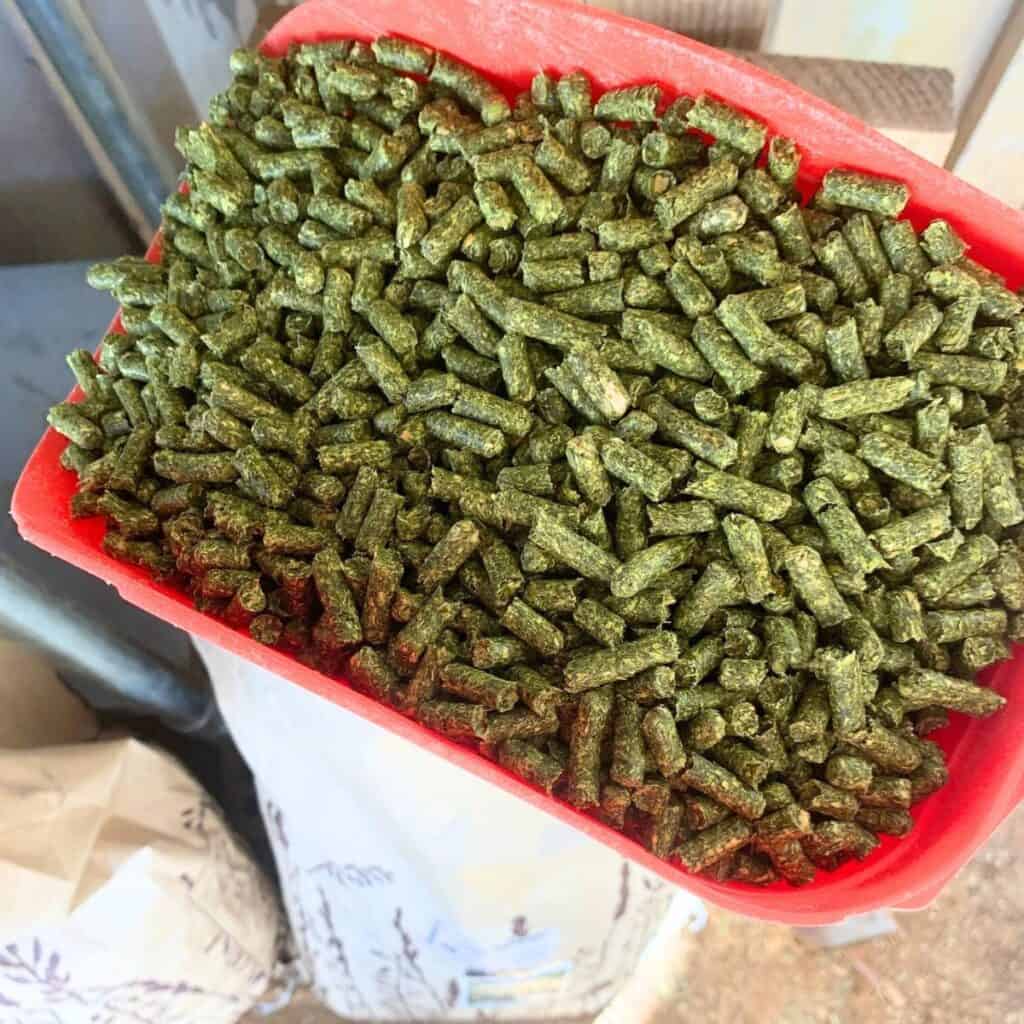
Last, add in the alfalfa pellets. This is the most expensive ingredient, but the queen because it has the highest protein content.
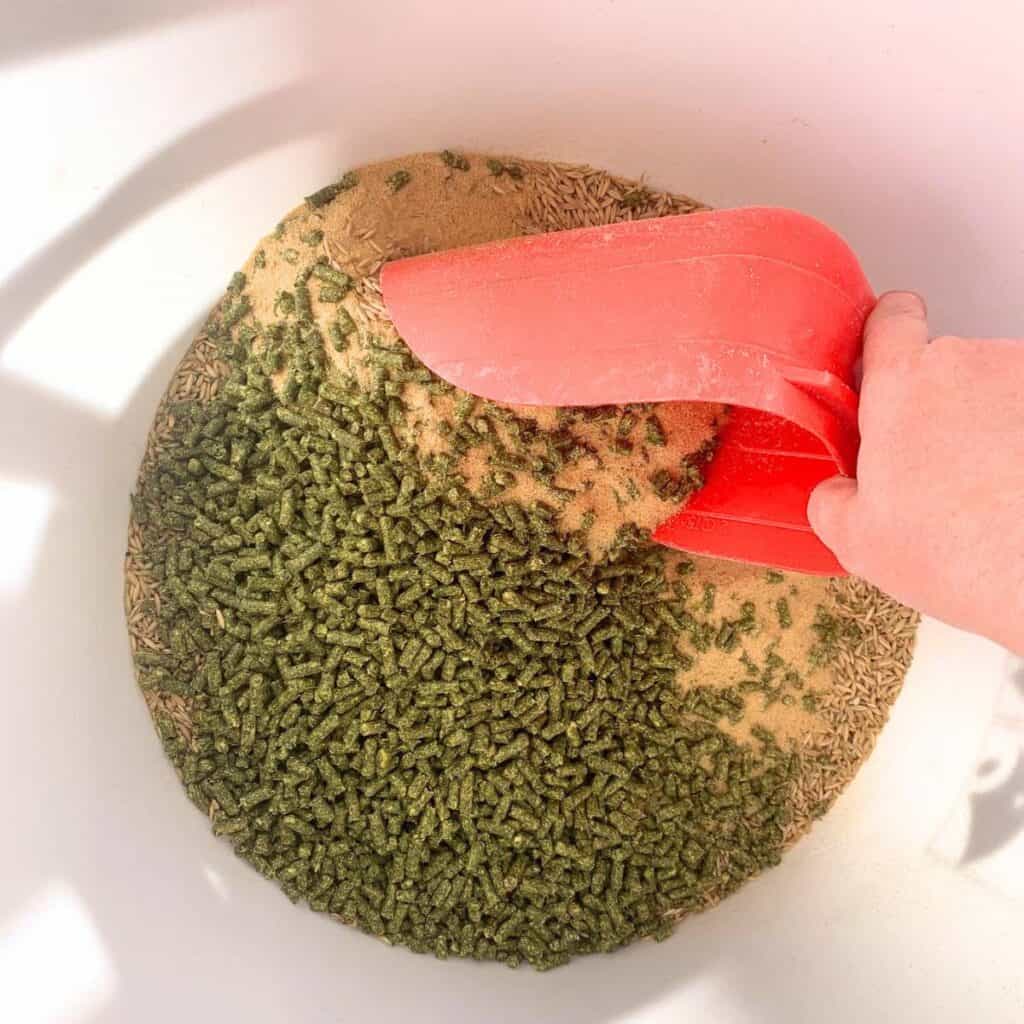
Mix all the ingredients together with your scoop.
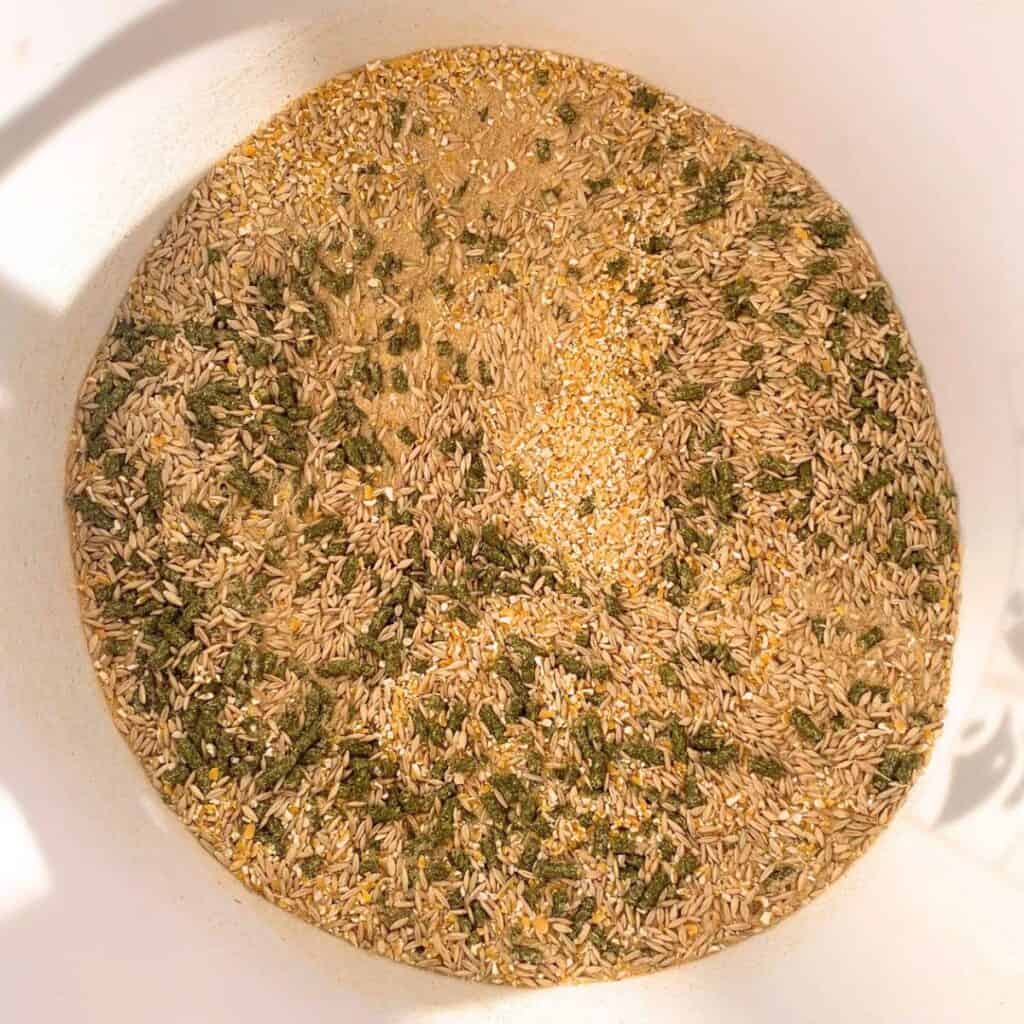
Your mixed organic feed for dairy cows should be pretty well combined at this point.
Keep going until you use all your bags of feed. Using the same bags from Azure Standard that I use, your feed should fill up a larger and medium size storage container.
And that’s it!
Reasons to make organic feed for dairy cows.
- If you’re going to feed your dairy cow, giving them an organic option will avoid the toxins of non-organic feed being passed through to the milk.
- You would want to give your cow a dairy ration if their body requires it to produce milk, and they would get too skinny and unhealthy without it.
- Feeding your cow a dairy ration will keep them still and occupied in the stanchion when it’s milking time.
- Giving your cow a dairy ration will build up their muscle and fat.
- You would want to give your cow a dairy ration to increase the amount of milk they produce. For example, some dairy farmers milk up to three times per day.
Reasons not to make organic feed for dairy cows.
- You don’t want to give your cow a dairy ration if your cow can produce milk and maintain her body weight while on a strict grass (and good hay) diet…and having 100% grass-fed milk is important to you.
- If you’re not going to feed your dairy cow organically, you don’t need to make organic feed for her.
- You don’t want to give your cow a dairy ration when you are drying her off. See the section on Milk Fever, below.
- You don’t want to give your cow a dairy ration if you are trying to reduce the amount of milk she produces.
- You don’t need to make your own organic feed if you can buy organic feed for cheaper than what it would cost you to make it.
Why should you make organic feed for dairy cows at home?
Did you know that a lot of animal feed that you buy, if it is not labeled “organic”, then it probably has pesticide and other toxic chemical residue in it? Then, when you feed it to your dairy cow, those chemicals can pass on to you the consumer through the dairy milk.
I recently watched some of my favorite homestead YouTubers mention that they were getting sick. Eventually, they traced it to non-organic animal feed they were giving their animals.
Glyphosate toxicity was the issue for them, and they were facing cancer and other illnesses. Fortunately, they found out in time and are now on the road to recovery, which includes several months of detoxing to get that stuff out of their system.
Thank the Lord for good doctors and lab technicians!
Recipe Variations and Additional Ingredients
If you can’t find all five ingredients I’ve listed, don’t worry. Use what’s available to you. You can use just alfalfa, or alfalfa and barley, or other variations and it won’t affect milk production.
I do like to add some other ingredients when I’m getting ready to milk our cows, but they’re strictly optional. You can use them if you have them.
Molasses – I buy organic blackstrap molasses in a one-gallon jug from Azure Standard, and it lasts me about a year. It adds a sweet flavor; and it’s rich in iron, potassium, and calcium. I add just one or two tablespoons to the top of the dairy feed in the bowl just prior to milking.
I leave the jug in our dairy barn, and I don’t worry about refrigerating it. It doesn’t ever get moldy, but it does come out slowly during cold months.
Diatomaceous Earth – I buy food grade diatomaceous earth in a bulk 50-pound bag from Azure Standard, and it lasts me several years. Just sprinkle a tablespoon or two to the top of the dairy feed prior to milking, or you can add a few cups at the same time you’re mixing your dairy feed.
If there are any pests that find their way into your feed bin, the diatomaceous earth will kill them organically before they become an infestation. The microscopic sharp edges slice and dice.
I personally like for all my animals to consume a bit of diatomaceous earth sprinkled onto their food pretty regularly. It’s a maintenance routine that keeps everyone from getting worms in their digestion.
Turkey Tail Mushroom Powder – A lot of research has been done touting the benefits of turkey tail mushrooms. While I don’t enjoy the flavor of it myself, the cows don’t seem to mind it. One 7-ounce container lasts us about a year, and I add about a teaspoon to the top of the dairy feed in the bowl just before milking.
Our dairy cows have some small bumps under their skin in a few spots, which I believe are cysts or some other type of benign growth. The mushroom powder helps to soften and dissolve them naturally.
Apple Scrap Vinegar – I like to pour about a half-cup of homemade vinegar to the top of the dairy feed just before milking. I’ve read that it helps keep their rumen at a good pH. They seem to enjoy it.
Dairy feed and milk fever
You should never give your dairy cow a dairy ration when you are trying to dry her off. Drying off your cow means that you are reducing the time that you milk and the amount of milk that you take from your dairy cow in order to dry her off. That means you’re getting her to stop producing milk.
You generally only dry off your cow right before they have their next calf. That way they can have a two or three month break where all their food energy can go into creating a big healthy baby calf instead of into milk production.
If you give your dairy cow a dairy ration when you’re trying to dry her off, you run the risk of milk fever.
Milk fever is potentially life-threatening. If you don’t catch milk fever in time, the rich grass or rich grain ration will make their body want to produce milk. And if you’re not milking out your dairy animal, they get engorged and it can lead to mastitis, other infections, or milk fever, and potentially even death.
How often should dairy cows be fed a dairy ration?
It depends on your specific cow, pasture, and priorities, but you could feed your dairy cow a dairy ration the same number of times that you milk them per day. For example, if you milk once per day, they would be fed a dairy ration in their stanchion once per day. If you milk twice per day, they get fed twice per day.
Some large farms feed their cows three times per day or more so that they can get more milk. I wouldn’t recommend that for small farmers and homesteaders. There is a point when that gets too expensive, both in dollars and in our time.
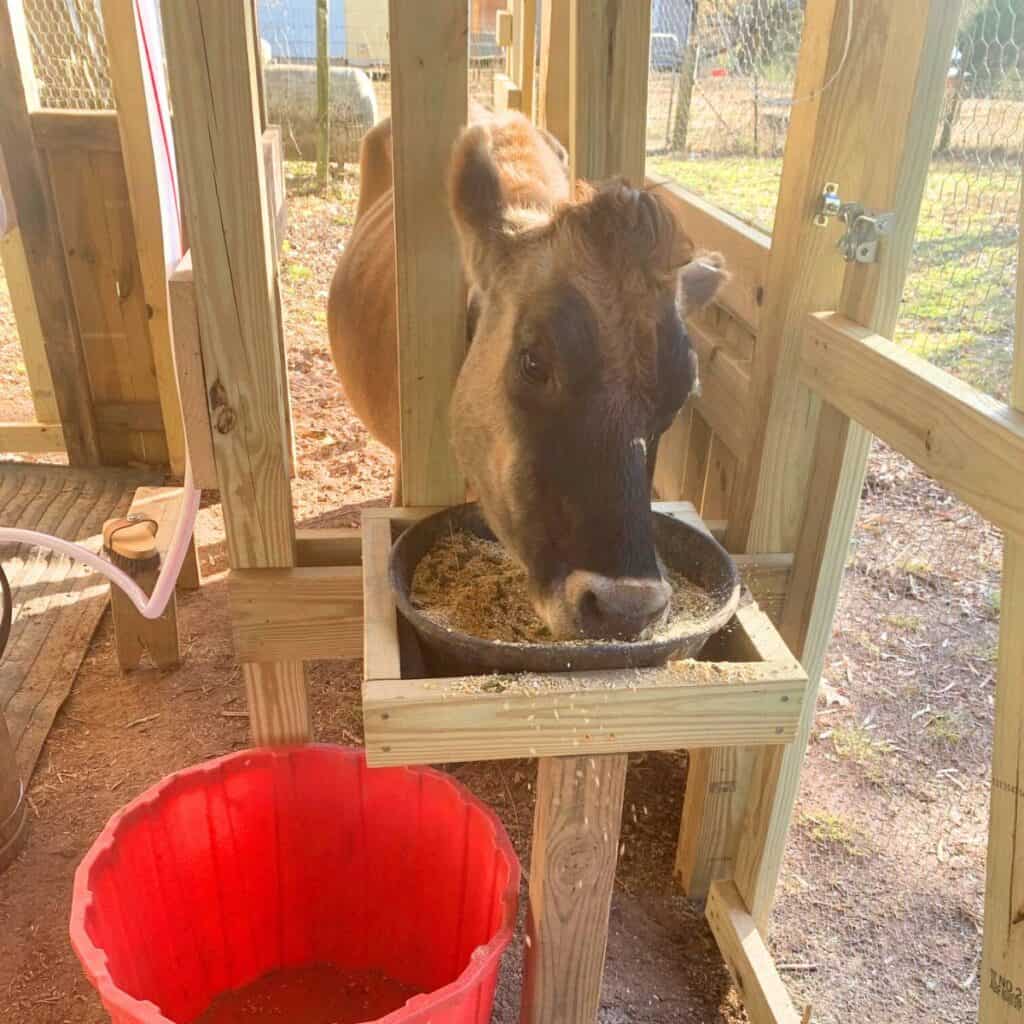
How much should you feed a dairy cow per day?
How much you feed your dairy cow per day will depend on your setup and your resources. If you are milking by hand, it will take you longer to milk her out and she will eat more. If you have a milk machine, it takes less time to milk her out and she will eat less.
We have a Melasty milk machine now, but we used to milk Belle and another dairy cow we were babysitting by hand. When we milked by hand, the cows wouldn’t stand still unless they had their dairy ration in front of them.
When we are hand milking, it takes us about 15 to 20 minutes to milk a cow out. During that time, the cows would eat six scoops of dairy ration. Our scoops are mostly 5-pint utility scoops, and we keep them in the containers of feed.
Roughly, 1 pint = 2 cups = 16 ounces = 1 pound. Therefore, 5 pints (a “scoop”) = 5 pounds.
Hand-milking for 15 to 20 minutes: Six “scoops” = 30 pounds of feed. With our grain mixture costing us $0.59/pound, that totals $17.70 per milking session.
The Melasty milk machine cut our time in the stanchion down to just 7 minutes. In that time, our dairy cow eats four scoops of feed.
Machine-milking for 7 minutes: Four “scoops” = 20 pounds of feed. With our grain mixture costing us $0.59/pound, that totals $11.80 per milking session.
How feeding grain affects milk production.
Feeding grain increases the amount of milk dairy cows produce. How much of an increase depends on the cow, but the extra protein, plus the tasty snack waiting for them in the stanchion, is something dairy cows crave.
Unlike lactating human women, dairy cows have the ability to start and stop the flow of milk coming out. I find that when our cows have grain in their bowls rather than hay or grass clippings, they have a fast let-down and give us more milk.
Happy cows equals more milk and cream for us!
PennState Extension wrote an interesting article if you would like to learn more: Economics of Supplemental Feeding with Pasture-Based Systems. They found that when supplemental grain is fed, milk yield increases and concurrently, fat yield increases.
But for the average homesteader, it ultimately will come down to your resources, your time, and your priorities. There are successful homesteaders who choose dairy cows that don’t need supplemental grain to produce milk to meet their family’s needs.
Brushing your cow and talking lovingly to her increases milk production, too, in my opinion. So choose what works best for you, your cow, and both your needs in the end.
Shop This Post
26.5 gallon locking tubs with lids



Thank you for your post! So informative! How much of each grain do you use?
Hi Ellie, I’m glad you found this article helpful! The recipe is very forgiving, so nothing needs to be exact. I simply use a large animal feed scoop (usually a 5-pint utility scoop) and take a scoop of each large grain and add it to my feed bucket. Except for the wheat bran, which is a fine powder…I only put half a scoop of that in my bucket. You can use all the ingredients that I use, or leave some of them out, too. I’m big on the “use what you have” philosophy.
Love, Rebekah
This was great! I appreciate this post!
If I’m drying a cow off (2-3 months before calving correct), how do I go about that the right way? If I am milking twice a daily, do I just go to once a day and do that for how long?
Do you possibly have a post on how to dry off and how to decrease feed?
Also how do you milk once a Day and not worry about mastitis?
I am fixing to get my first milk cow and I’m a little worried I’ll do something wrong!
Hi Chelsea,
Congratulations on becoming a new cow owner! I know exactly how you feel because I was in your shoes…haha. Don’t worry, and give yourself grace as you learn the process for keeping a happy dairy cow. I’m sure you’ll be just fine! And I’m glad you found the post helpful! Here are the answers to your questions. (I don’t have a post on how to dry off a cow yet, but it’s in the works.)
1) Correct, you should dry off your cow before she calves, at least 2 months or more in advance of her calving. That way all her energy goes to producing a healthy baby instead of making milk. We usually start drying off our cows 3 months in advance, and then they are “dry” by 2.5 months. We generally wean a calf off between 6 months and her next calving date, too. For us, we put the calf in a separate pasture so it can’t nurse on demand.
2) If you are currently milking twice a day, I would recommend starting to dry your cow off at 3 months, also. First, when you’re trying to decrease her milk production, don’t give her anything extra to eat except for what you normally give her in her stanchion during milking time. I would also omit the barley, corn, wheat, oats, and other grains that are known to increase milk production. Stick to just alfalfa pellets or something similar. Second, bring the milking times together gradually. For example, if you milk at 8am and 5pm normally, start going at 8am and 4pm for a day, 8am and 3pm the next day, 8am and 2pm, and so on until you are just milking once a day at 8am (whether it’s morning or night, choose whatever time is best for you…it works both ways). Do once-a-day milking for a week or two, and monitor how much milk she’s producing. Be sure she’s just eating grass and/or dry hay when she’s not being milked. No extra treats. Then, when you’re ready to dry her off, you will start spreading out your once-a-day milking. For example, if you milk her at 8am normally, start going at 9am for a day, push it to 10 am the next day, 11am the following day, noon, and so on until you can stretch out her milking times. A dairy cow’s milk production is all about supply and demand. If you and a calf don’t demand it, she won’t supply it. You want to milk her out completely during this time, and continue to monitor how much milk she’s producing.
For us, we know we’re ready to stop milking when our dairy cow produces a gallon of milk or less per milking day, and we haven’t had mastitis develop. Our process is that we will milk a day, skip a day, milk a day, skip a day, and the milk production will go down to one gallon or less. Her udder should feel soft, not engorged with milk, when you’re ready to stop milking altogether. And then I would check on her every day and gently touch her udder and teats to make sure it stays soft and not engorged. Once you decide to dry her off completely, check on her every day and don’t do anything to stimulate milk production, like squeezing her teats to see if milk will come out, or brushing her udder, or putting her in the stanchion or wherever you milked her. If you check on her and find her engorged with milk, milk her out. But the goal is to spread out the milking until she stops being engorged with milk. Then when she’s down to a gallon or less per milking, you can quit and pretty much be assured that she will dry off on her own. We usually continue to check for about a week after stopping milking to make sure her udder feels soft and not engorged with milk. If she goes a week without being milked and her udder stays soft and not engorged, she is drying off.
We don’t use anything over-the-counter to squirt in the teats that dries off a cow and seals the teat to prevent mastitis. For us, natural, cheap, and old-fashioned is the best way. Commercial dairy farms do things differently.
Note About Mastitis – If you are milking once per day, and you are milking her out pretty completely, you don’t have to worry about mastitis. Also, when you proceed with skipping days between milking to decrease her milk production, you also don’t have to worry about mastitis. Just be sure she has clean pasture to sleep on and that she’s not laying in a filthy area where the bacteria from the filth can enter her teats to cause mastitis. For us, we shut our barn stalls and force our cows to sleep in the pasture where there’s more than enough room to roam and not get muddy or dirty.
I hope this helps you! Remember to give yourself plenty of grace and trust the process!!
Love, Rebekah
How long does this last you? Trying to figure out how many bags of each ingredient I need to order for 1 month at a time. Do you milk/feed ration 2x/day?
Hi Kelsey,
How long the dairy feed lasts really depends on how much your cow eats when she’s being milked, and how often you milk her. We milk two cows about twice a week right now. One cow eats a pretty good bit in the stanchion, and the other doesn’t eat as fast. When we use four of the five ingredients (we haven’t been buying the corn lately; so just barley, oats, wheat bran, and alfalfa), that lasts us about a month. So if you’re milking one cow once per day, four days per week, I’d say using four of the five ingredients will last you about a month, also. If you milk more often than four times per week, I’d get a second bag of each ingredient. You may want to start out buying two bags of each ingredient in the beginning, and then keep track of how fast it’s used up. The Azure feed stays fresh for several months before going bad.
Tip: When we use the wheat bran, the powder seems to make our cows eat slower.
I hope this helps you!
Love, Rebekah