Making a Comfrey Poultice for a Lame Cow
This post may contain affiliate links. Please read our disclosure policy.
Making a comfrey poultice for a lame cow is easy to do and can speed up the healing process. If you are not familiar with the medicinal herb comfrey, also known as knit-bone, I highly recommend researching it!
If you already grow a medicinal herb garden, you may already have some comfrey in it that you harvest and use for you or your injured family members. But have you thought about using it on your animals?
Cow Injuries on the Farm
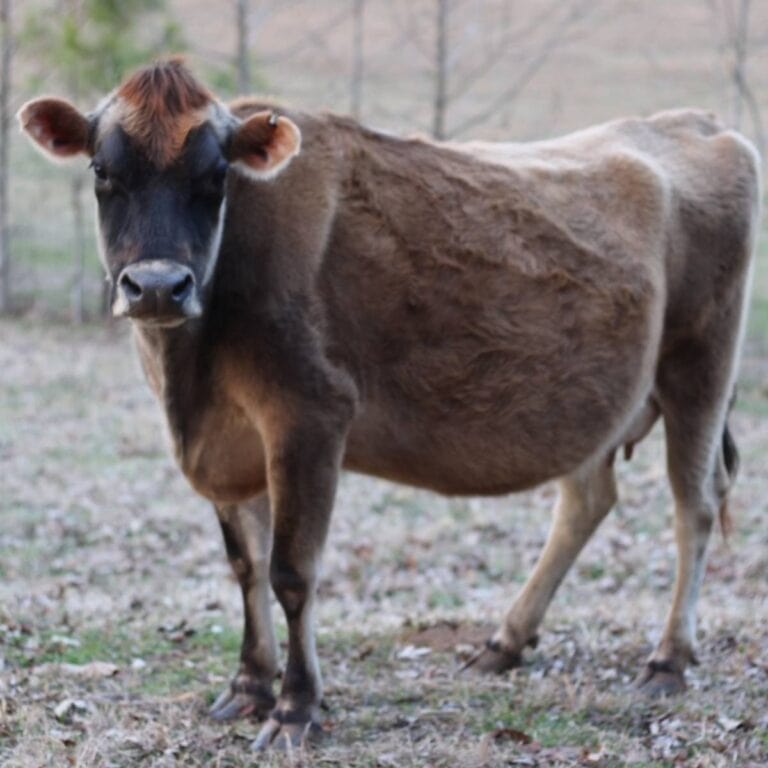
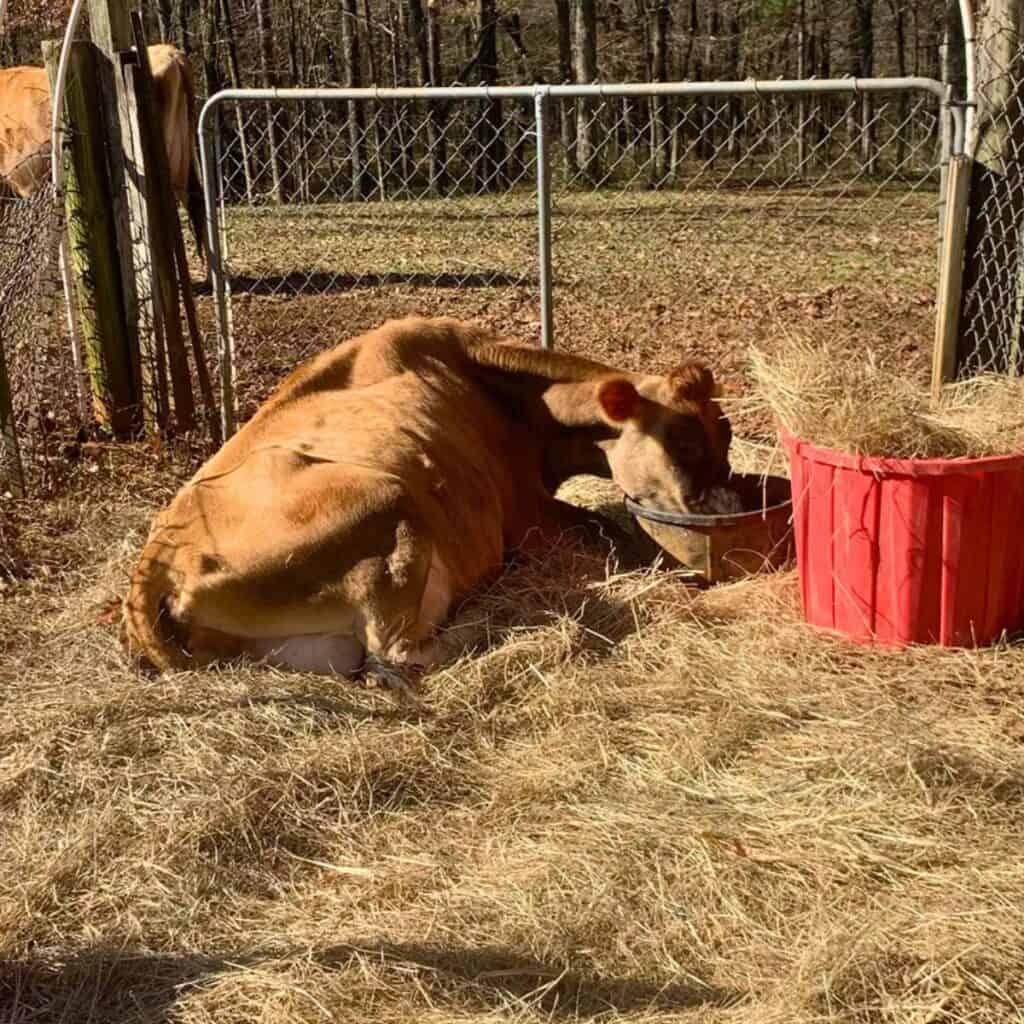
One of the scariest days of my life happened right after we put Belle (our mid-size Jersey dairy cow) into a different pasture to be bred. Right before our eyes, some larger cows knocked her over. And Belle went down.
We immediately brought her back over to our side of the fence and back to her normal pasture. But we noticed she was limping.
Fast forward to the next day, it had been raining and the ground was slippery. As Belle was backing out of our dairy barn from being milked, one of our other dairy cows (who we will not name…shame on her…but we still love her) knocked her over…HARD…to get into the stanchion to be milked. Belle slipped and fell to the ground in an awkward position and cried out in pain.
I heard myself scream out her name and rushed to her. And then I tried to help pick up this 900-pound cow as she struggled to stand on her own. But her back knees and ankles were badly injured.
My precious son was nearby and was able to grab a bowl of grain for her, which caught her attention, and we were able to help her walk to a secluded area.
I had to hold her back ankle and lift and place her leg every time she needed to take a step with that leg. It took us about 30 minutes to go 20 feet.
And then she laid down. The worst thoughts flooded my mind. Were her bones broken? Would she ever be able to walk again? And worse.
The Extent of our Cow’s Injuries
Once we got Belle away from the other cows, we were able to analyze the situation. It was bad.
She was on the ground and couldn’t stand without falling over. Her ankle and knee were swelling but I didn’t feel any broken bones. That was good news.
Then my sweet daughter suggested a comfrey poultice because she had seen me use a poultice on myself for an injured knee.
So we set off to work and couldn’t be more pleased with the results! After keeping a comfrey poultice on Belle nearly all day for the next 5 days with regular changes, she was finally able to stand up on her own again.
It’s now been 6 months and Belle is walking and getting better every day. She still has a limp and isn’t 100% better yet, but we are hoping and praying that she will make a full recovery in the next 6 months.
We believe she tore some ligaments in her knee and ankle. Those types of injuries just take a long time to heal.
What is comfrey?
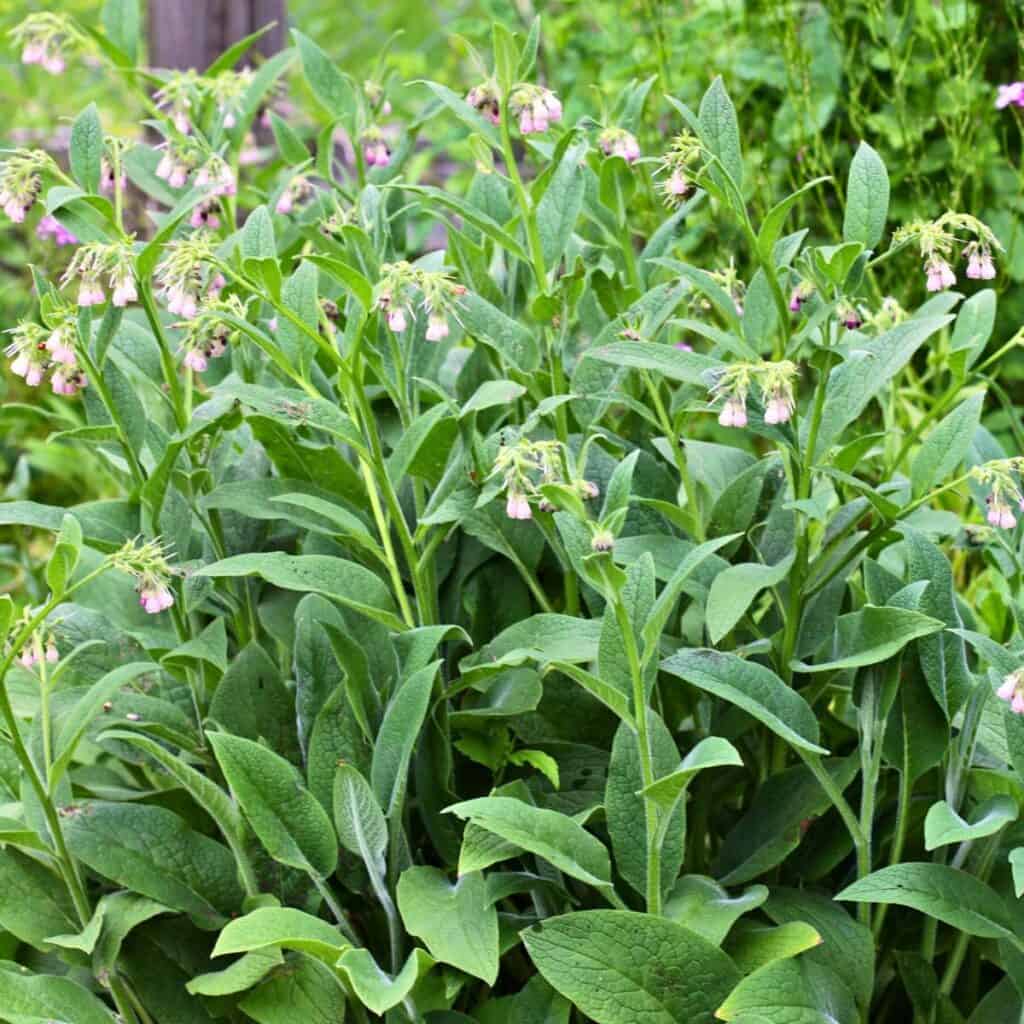
Comfrey (Symphytum officinale, and Symphytum uplandicum) is a medicinal herb that is native to Bulgaria and Albania, but you can pretty much grow it anywhere. It has been safely used for hundreds of years to help heal internal injuries, but there are some important facts you should be aware of.
It loves to grow in damp places, has bell-shaped flowers (beautiful if you want an attractive herb garden), and large and hairy leaves. Both the roots and the leaves have medicinal qualities, but I prefer using only the leaves to heal injuries.
What is a comfrey poultice good for?
Comfrey is most commonly used to make a comfrey poultice that you would lay on a bruise, sprained joint, pulled muscle, or broken bone. But you can also powder it up and turn it into a healing salve or balm.
Amazingly, just 4 hours of a comfrey poultice is sometimes all you need to heal something that has been injured! Although, from personal experience sometimes it takes two or three treatments of a comfrey poultice to heal something badly injured.
My knee injury and experience using a comfrey poultice
I injured my knee pretty badly in the past. It swelled up and I couldn’t walk on it. Then I made a comfrey poultice as I’ll describe to you below, wrapped my knee with it, set a heating pad on it along with a towel, and tried to sit still.
My first treatment was at night and I was able to keep the poultice on for about 6 hours. My knee felt a world better, but it still hurt to walk on and was still swollen. I did two more treatments and was right as rain after!
I have friends who have successfully used a comfrey poultice for their various injuries, and it’s amazing at how fast and effective it is. Some are back to normal after one 4-hour treatment while others need a few treatments.
How to Make a Comfrey Poultice for a Lame Cow
To make a comfrey poultice for a lame cow (or other animal or person), blend some hot water with comfrey leaves, spread the comfrey paste onto paper towels or scrap cloth, apply it to the injured body part, and wrap it securely with plastic wrap and an adhesive bandage wrap. If you can apply additional heat, all the better. Aim to leave the poultice on your skin for 4 hours the first time.
This post contains affiliate links, which means I make a small commission at no cost to you. See my full disclosure here.
Ingredients
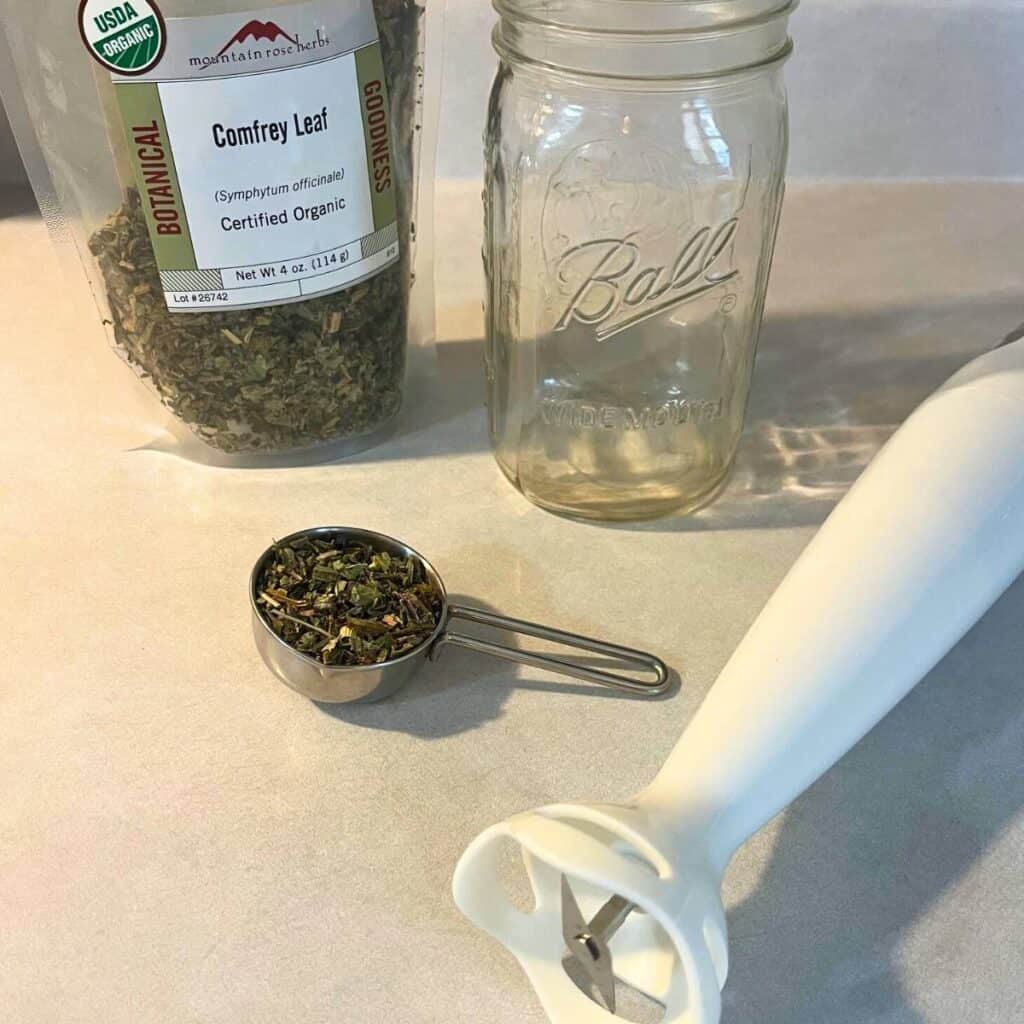
Comfrey leaves – You can use fresh or dried comfrey leaves. Use organic leaves if you can to avoid toxic chemical exposure. In a lot of places, comfrey grows as a wild weed, so you might have some in your own backyard!
Water – Use filtered or tap water. You won’t need much.
Tools You May Need
Small pot – I like to heat up water on my stove but you can also heat your water up in microwave or on a hot plate.
Blender – Use a high speed blender, immersion blender, or food processor to mix and puree the comfrey leaves with the water.
Paper towels – Paper towels are easy and disposable, so that’s what I use. But you can also use thin, scrap cotton like an old t-shirt.
Plastic wrap – You’ll need plastic wrap to hold the paper towels with the comfrey paste in place. It also helps to lock in the body heat and keeps the comfrey poultice from drying out.
Adhesive bandage wrap – I love adhesive bandage wraps. We buy them in bulk packages because there’s always a use for them on the farm. From veterinary care to self care, these wraps can make applying poultices easier.
Steps to Make a Comfrey Poultice for a Lame Cow
First, heat up a cup of water on your stove until it starts to simmer. You likely won’t need all of it.
Then, depending on the area you need to cover, put about 1/2 cup of dried comfrey leaves into the bottom of a glass jar. Use more or less depending on your needs.
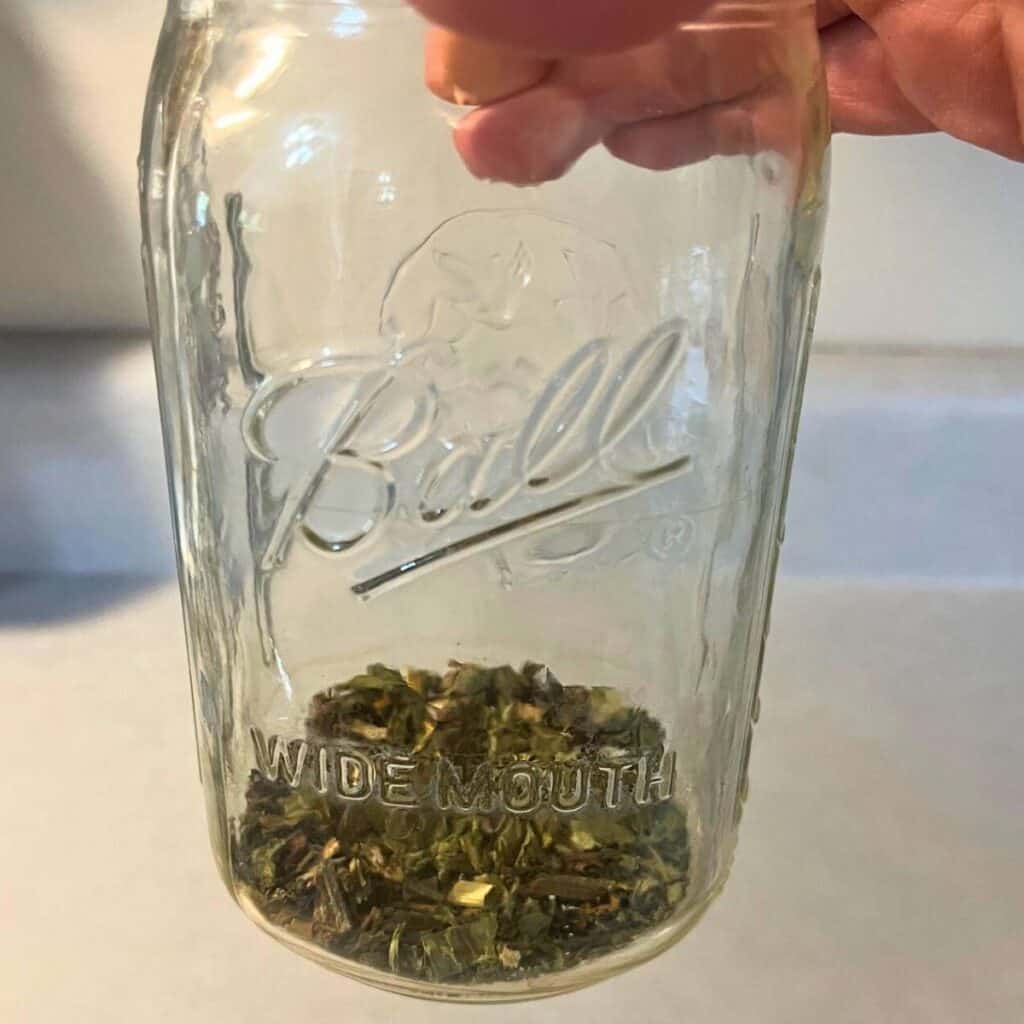
Next, add a bit of the simmering water to the comfrey leaves. You don’t need too much…just enough to make a wet mush or paste. And you can always add more water if you find that you need more when you blend it.
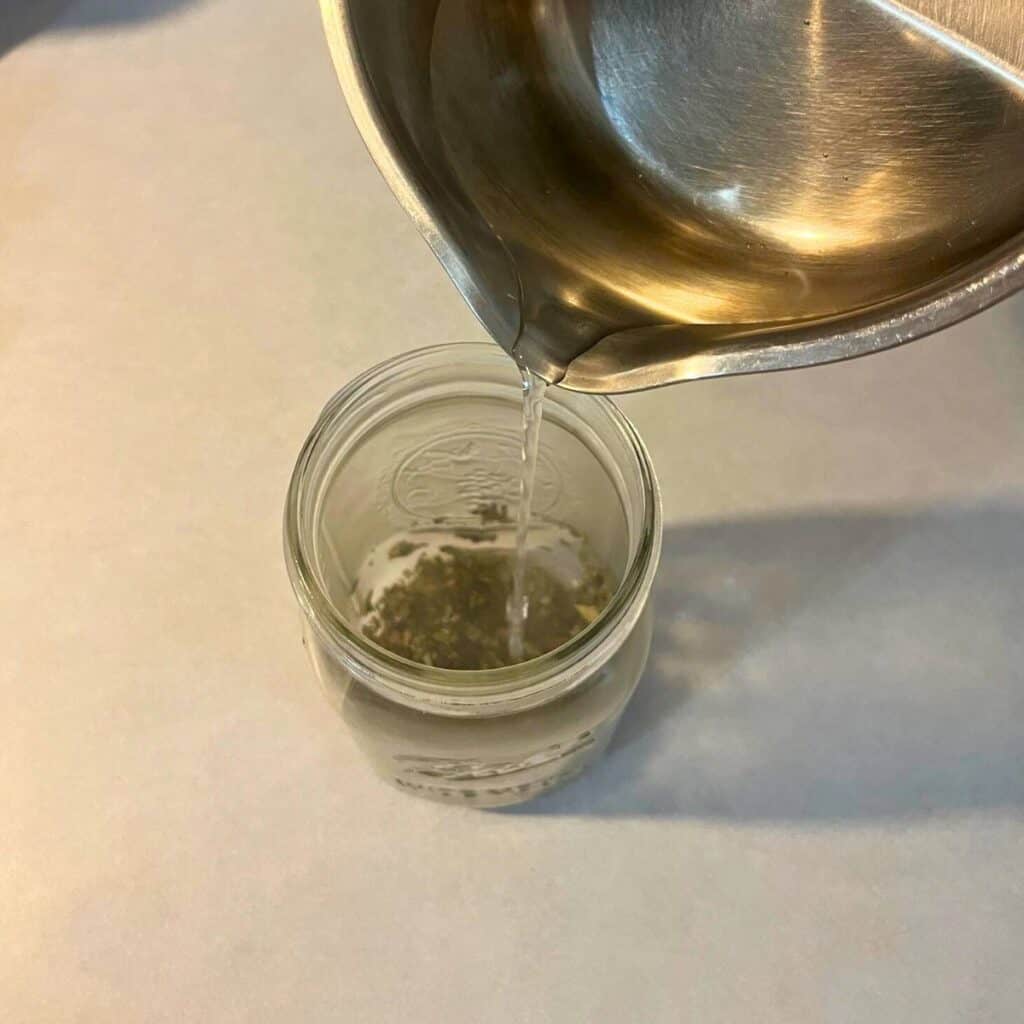
Use an immersion blender to blend up the simmering water and dried comfrey leaves. Alternatively, you can use a regular blender or food processor. Just be careful because a lot of models caution you against adding hot liquids to blenders.
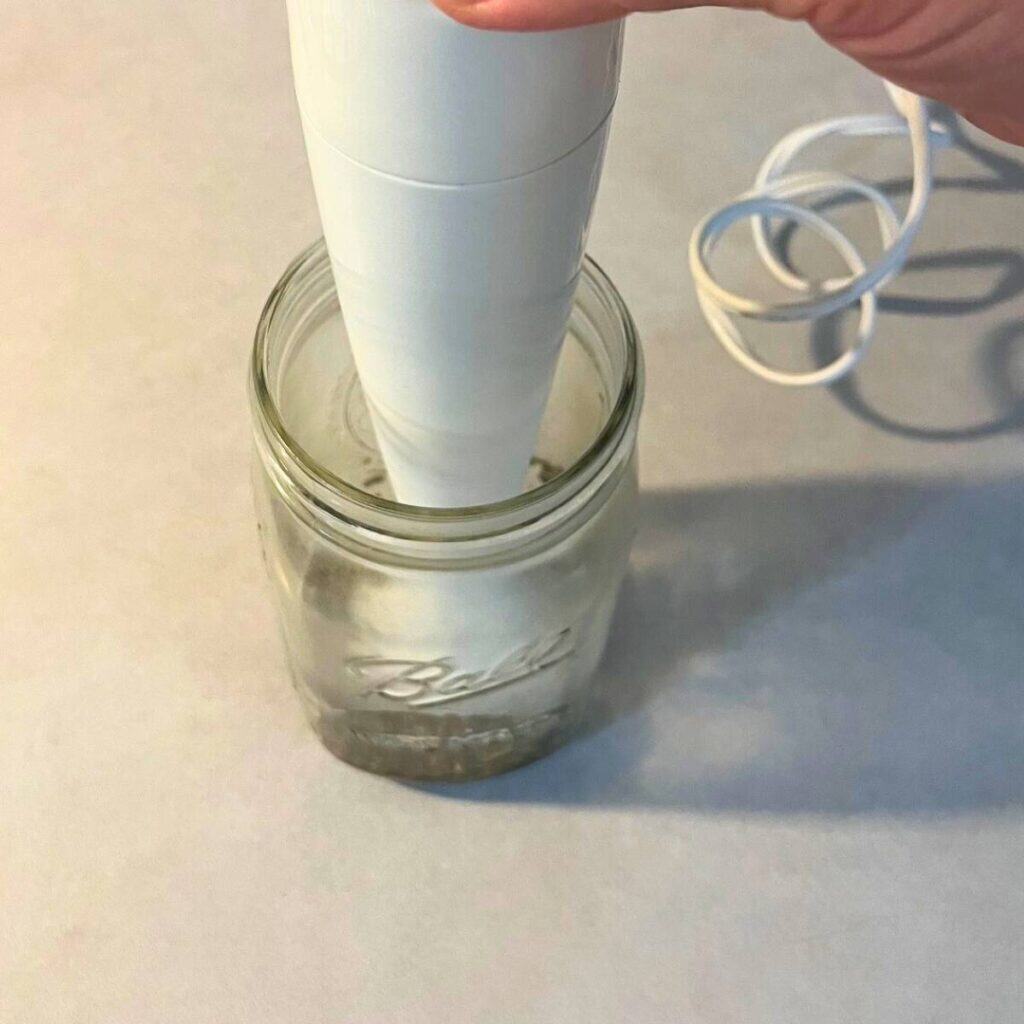
When your comfrey leaves are blended, get out your paper towels and plastic wrap.
At this point, I put a lid on my mason jar of comfrey mash, and took the supplies including a spoon and the adhesive bandages outside with me to where Belle was laying. It’s easier to make the comfrey poultice on site. However, I was so distraught that I didn’t take pictures of the actual process of us applying the poultice to Belle. I will demonstrate how to make one, though.
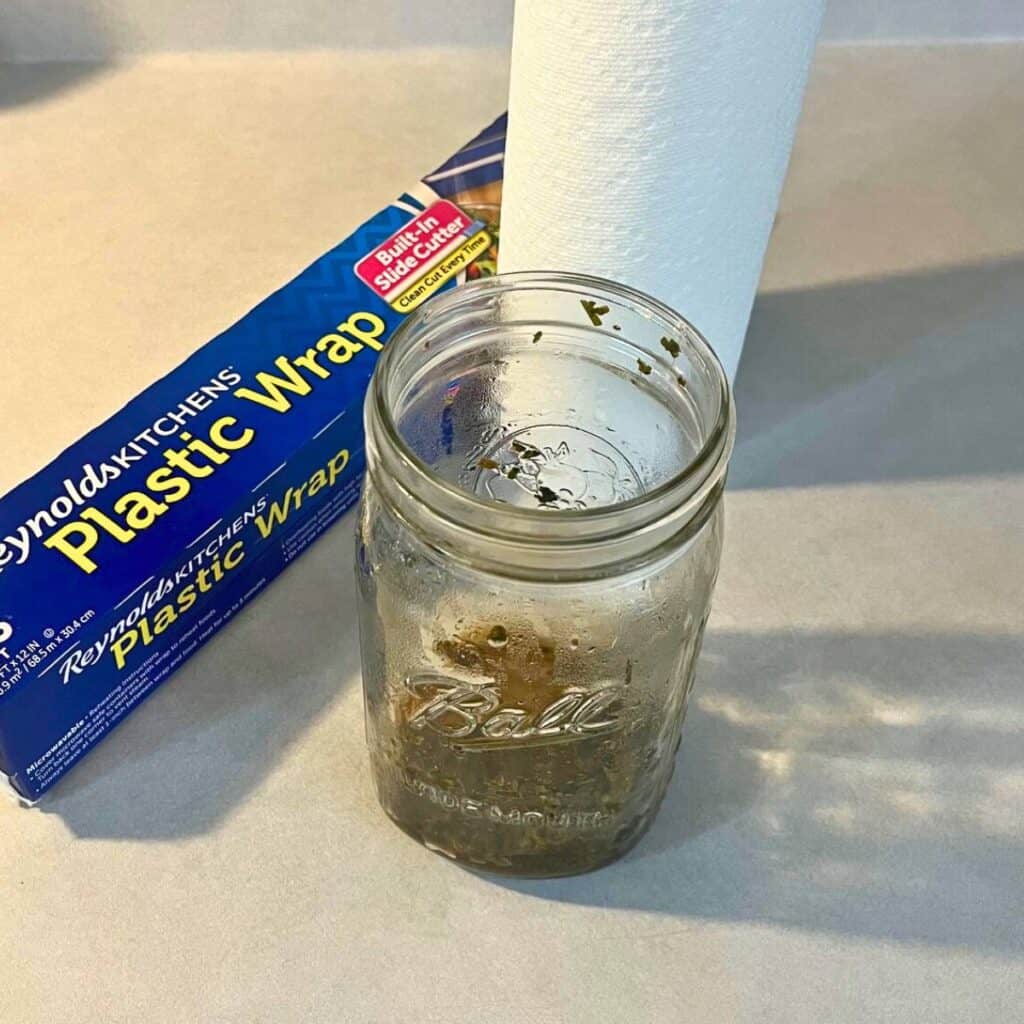
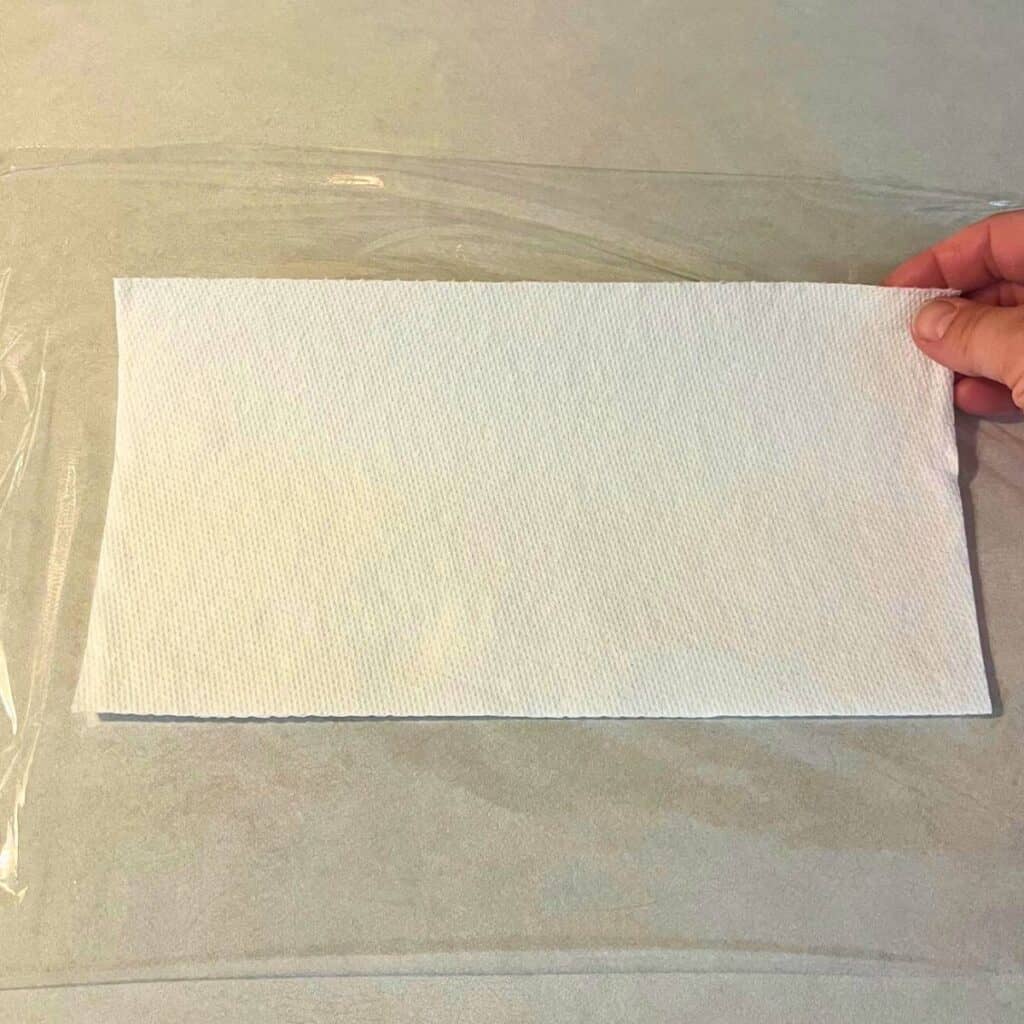
Put some plastic wrap down on a flat surface and add about two layers of paper towels or scrap t-shirt cotton in the middle.
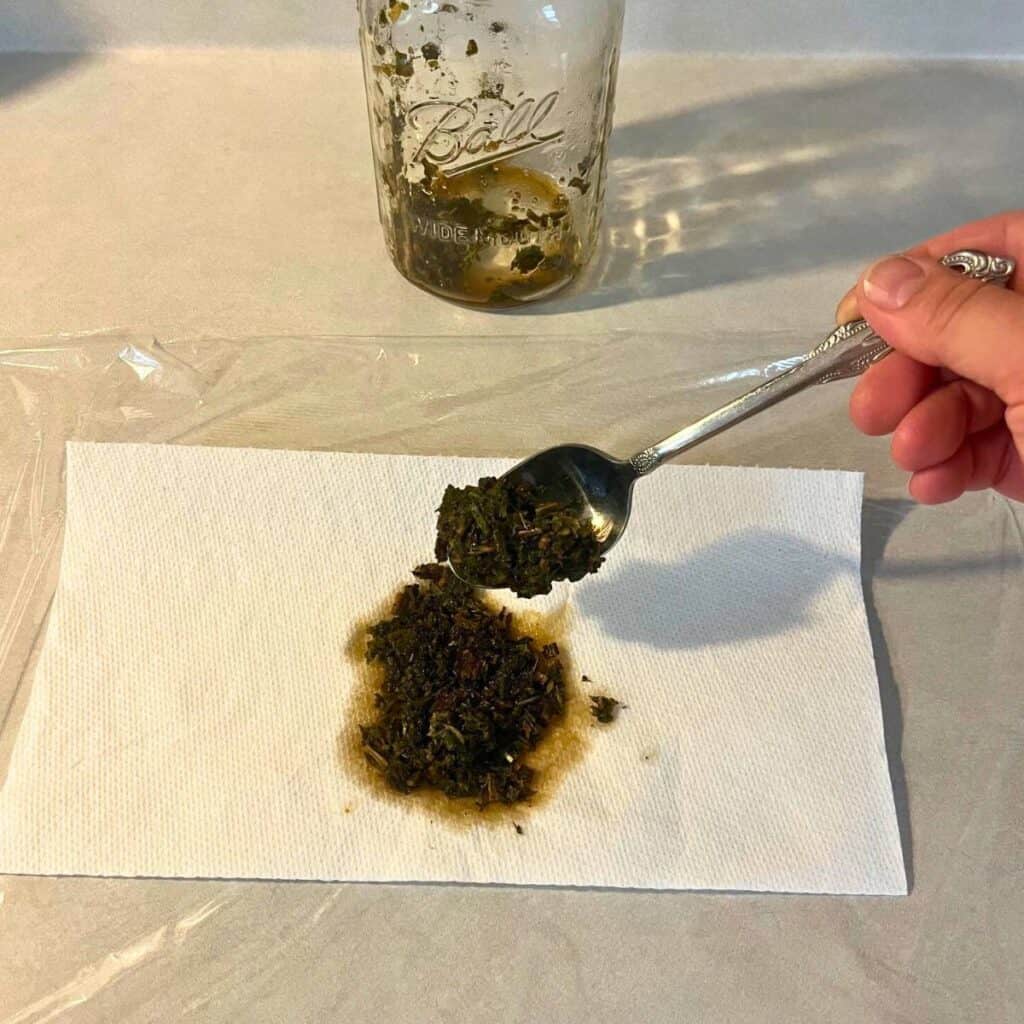
Spread the comfrey paste onto the paper towels (or scrap cloth).
Next, you wrap the injured body part with the paper towels and plastic wrap so that the comfrey paste is on top of the injury. And then apply the self adhesive bandage so that it stays in place.
And that’s all there is to it!
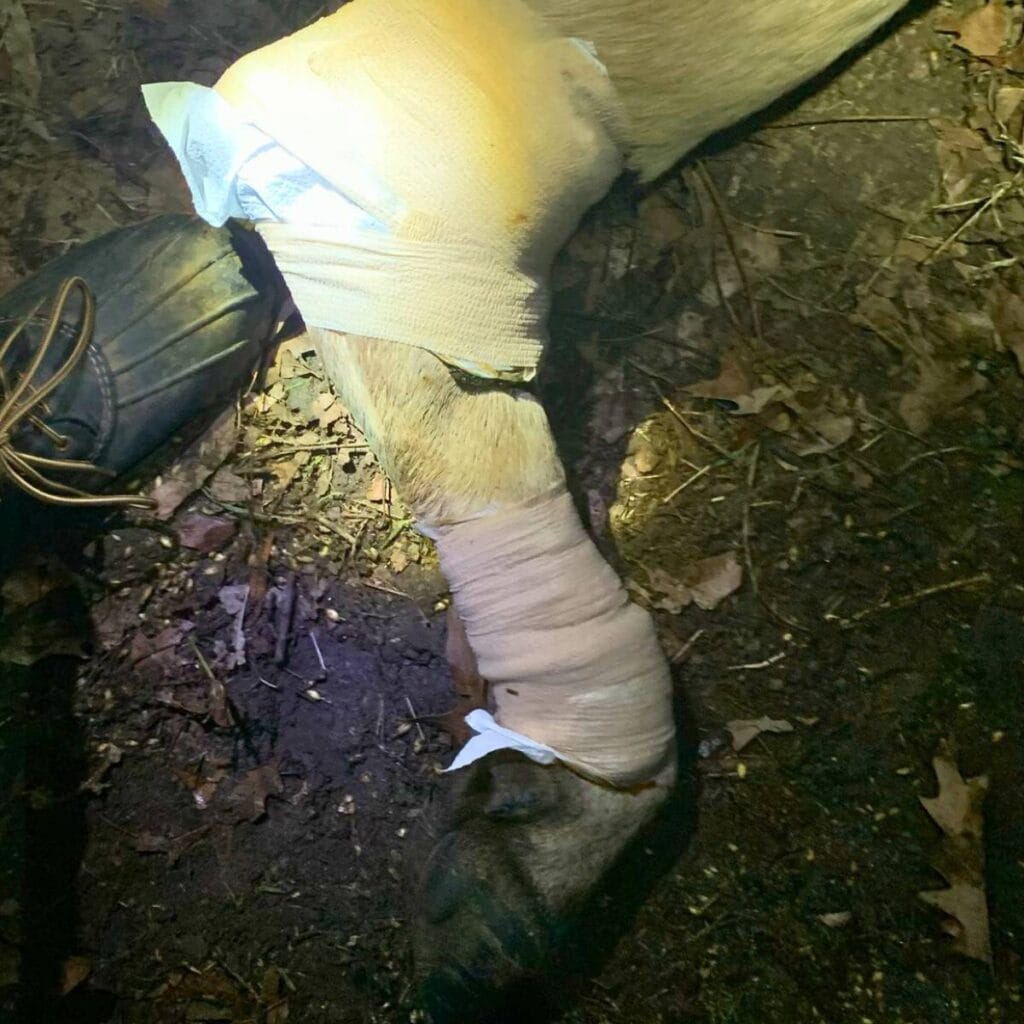
Here is Belle’s leg after we wrapped her ankle and knee with comfrey poultices. We would change it out with fresh poultices whenever her position allowed us to. Sometimes we could change it after 24 hours. Other times it would be 2 days.
Still, I’m convinced that the comfrey poultices and lots of prayer helped our dear girl get back on her feet again.

Here is Belle today, 6 months later. She walks anywhere she wants…just with a slight limp. But we believe she will be completely healed in another 6 months!
Making Your Cow Comfortable

During the initial recovery and rehabilitation, keep your injured cow separate from the rest of the herd. We put Belle in a small, closed-in space so she couldn’t walk or move around much. It was an alley that led to the milk barn, but we closed it off so Belle could stay close to the house but away from the other cows.
The other cows still came to visit her every day, though. I think they were jealous of all the attention she was getting.
Be sure to provide clean bedding, food, and water, all within easy reach. Before she could stand on her own, we made sure Belle had plenty of hay and water nearby, and we cleaned her stall multiple times a day. We ended up drying her off immediately because we knew we couldn’t milk her and we didn’t want mastitis to set in.
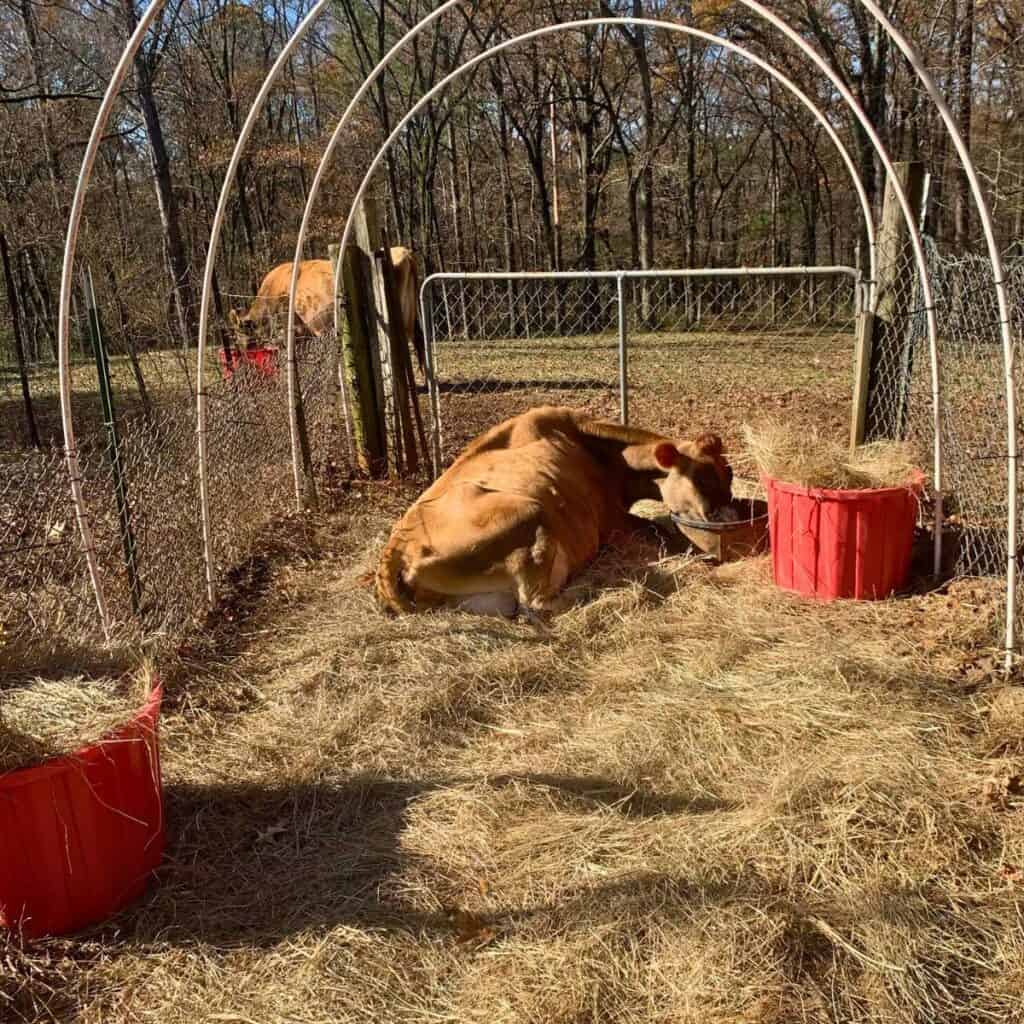
Provide a roof overhead, if possible. Since Belle wasn’t anywhere close to our barn, we built a temporary roof for her by attaching PVC pipes to the fencing and arching them over her. Then we draped it with a heavy duty tarp. This kept her dry and comfortable.
Once she was able to walk again, we moved her to fresh, clean ground.
What should you not do with comfrey?
Don’t drink it! – Comfrey is not intended for internal use, so don’t make it into a tea or tincture or otherwise consume it.
Don’t put a comfrey poultice on open wounds! – You need to be sure that you don’t put comfrey on any broken skin or open wounds. It’s best to use a comfrey poultice on bruises, sprains, and broken bones as long as the skin is healthy.
These guidelines are true for both humans and farm animals.
How long should I leave a comfrey poultice on?
Most people should leave a comfrey poultice on for 4 hours to get the maximum relief, but there are other variables you should consider.
Since you’re going to the trouble of making a poultice, get the maximum result by leaving the poultice on your skin for 4 hours. This will allow the medicinal herb to really soak into your skin and get to work solving the issues you have. But you can adjust this time to suit your schedule.
I’ve left a comfrey poultice on my skin for 8 hours before, but my skin felt a bit tingly after I took it off. The sensation wore off, but I just wanted you to be aware. If you have sensitive skin, you might need to start with a shorter time like 1 or 2 hours.
How quickly does comfrey work for a lame cow?
How quickly comfrey works to heal injuries depends on the extent of the injury. However, it usually only takes a few applications of a comfrey poultice to feel relief.
I kept a comfrey poultice on our lame cow for about a week, changing it as often as I could. Since our cow’s injuries were extensive, she needed a comfrey poultice longer. But I was surprised when she was able to stand on her own again after just a few days!
I could tell she felt a lot better, too, because she would try to jump in excitement…but then she would fall down. Still, I believe using a comfrey poultice on Belle helped her to feel better and recover enough to start walking again within a week, which we consider physical therapy.
I sincerely hope you never have to deal with a cow injury. But if you do, there’s no need to think the terrible thoughts that went through my mind. Bodies heal from the inside out. Take comfort in knowing that comfrey is a medicinal herb that soaks in deep to heal the inner parts!
Shop This Post
Pin It For Later!