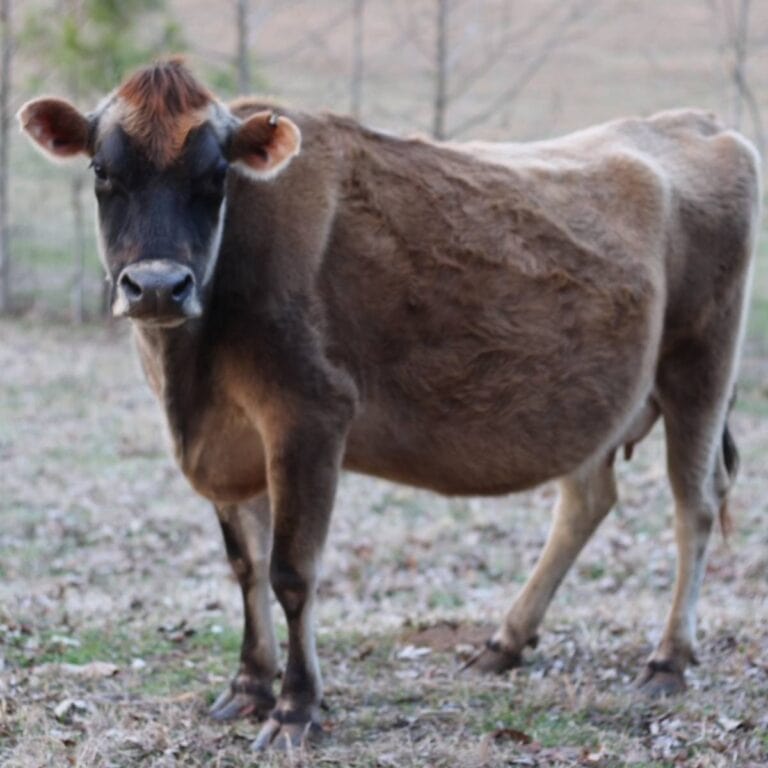
Step-by-Step Guide: How to Graft a Bottle Calf onto a Dairy Cow
In this step-by-step guide, I will show you how to graft a bottle calf onto a dairy cow. If you don’t want to use a bull to breed your dairy cow, buying a bottle calf is a great way to keep her in milk. You also have the benefit of raising another cow for your farm!
This post may contain affiliate links. Please read our disclosure policy.
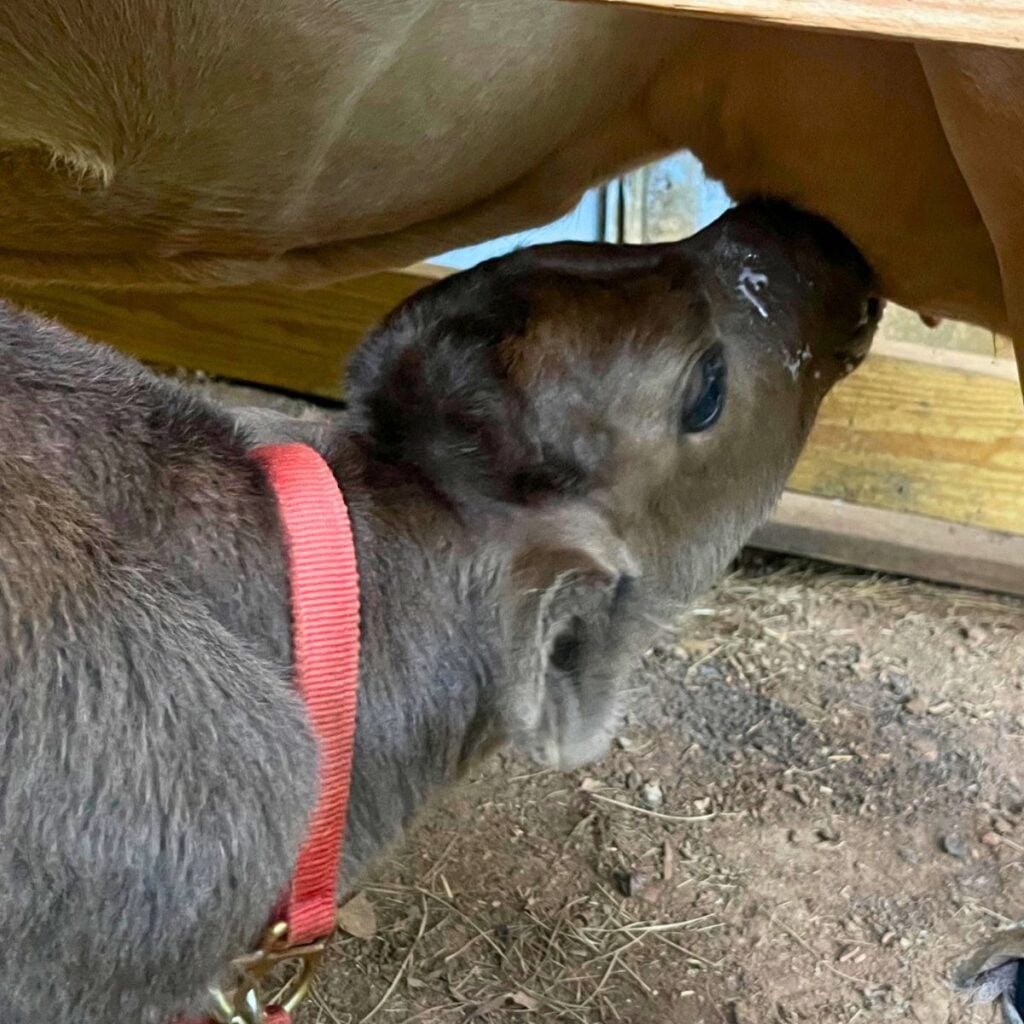
One of my favorite ways to grow our cattle herd is to buy a bottle calf (or “bottle baby”) and then graft him or her onto one of our dairy cows.
The gestation period for cows is roughly 9 months. When you buy a bottle calf, you skip the long wait for a baby. And this significantly reduces the amount of time needed to grow your herd!
Here’s an example. Once your dairy cow calves for the first time and goes into milk production, you could raise her original calf for the first 6 months before you wean it off. If you have a bottle calf available, you could graft it onto your dairy cow right after that, and she will stay in milk. And if you have a dairy cow that produces a lot of milk, you could graft two bottle calves onto her at a time!
Instead of needing almost 2 years to raise two calves, you can raise two calves in 1 year…and possibly more if you graft two calves at once.
Here’s another reason to graft a bottle calf onto your dairy cow. Sometimes calving complications result in a healthy mother in milk, but no baby calf to care for. That’s a sad reality sometimes for us farmers. When that happens, it’s important to milk your dairy cow until you can graft a new bottle calf onto her.
If you can find a cheap bottle calf near you, and you already have a dairy cow in milk, I highly recommend trying this at least once.
How to Graft a Bottle Calf Onto A Dairy Cow
It is not that difficult to graft a bottle calf onto a dairy cow if you have the right process, setup, and tools. I’ll walk you through everything you need to know in order to be successful.
Spend a week getting your cow’s scent onto the calf.
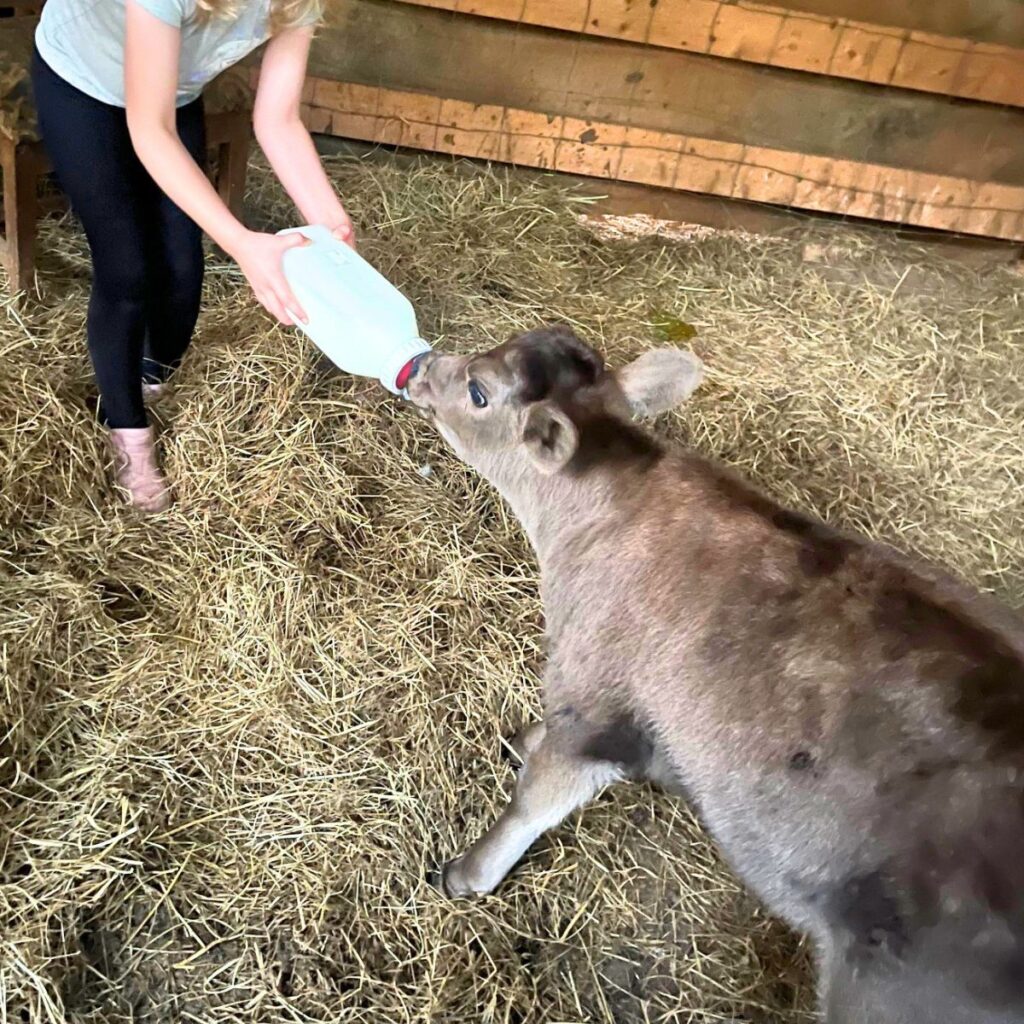
The first step in grafting a bottle calf onto a dairy cow is to get your cow’s scent onto the calf. This means that you’ll bottle-feed the calf your raw dairy cow milk at least twice per day.
Start saving your dairy cow’s milk or colostrum (the pre-milk liquid that first comes out after a cow has a calf) before bringing home the bottle calf. It’s good to have several gallons on standby in your refrigerator.
When you first get the calf home, put it in a safe, clean, and warm place like a barn. Then you need to bottle-feed the calf at least every 12 hours. We bottle-feed about 6:00 am and 6:00 pm.
I say “at least” every 12 hours, because that’s what works for us. However, you can feed the calf more often, like three evenly-spaced feedings.
I’ll admit, it is hard to get up early in the winter and go out when it’s freezing cold to bottle-feed a baby. But keep in mind that this is only temporary.
Use a 2-quart calf bottle with screw-top nipple to start with. But you will quickly need to make two bottles per feeding as the calf grows and requires more milk. See additional details below.
Heat up the raw dairy cow milk the right way.
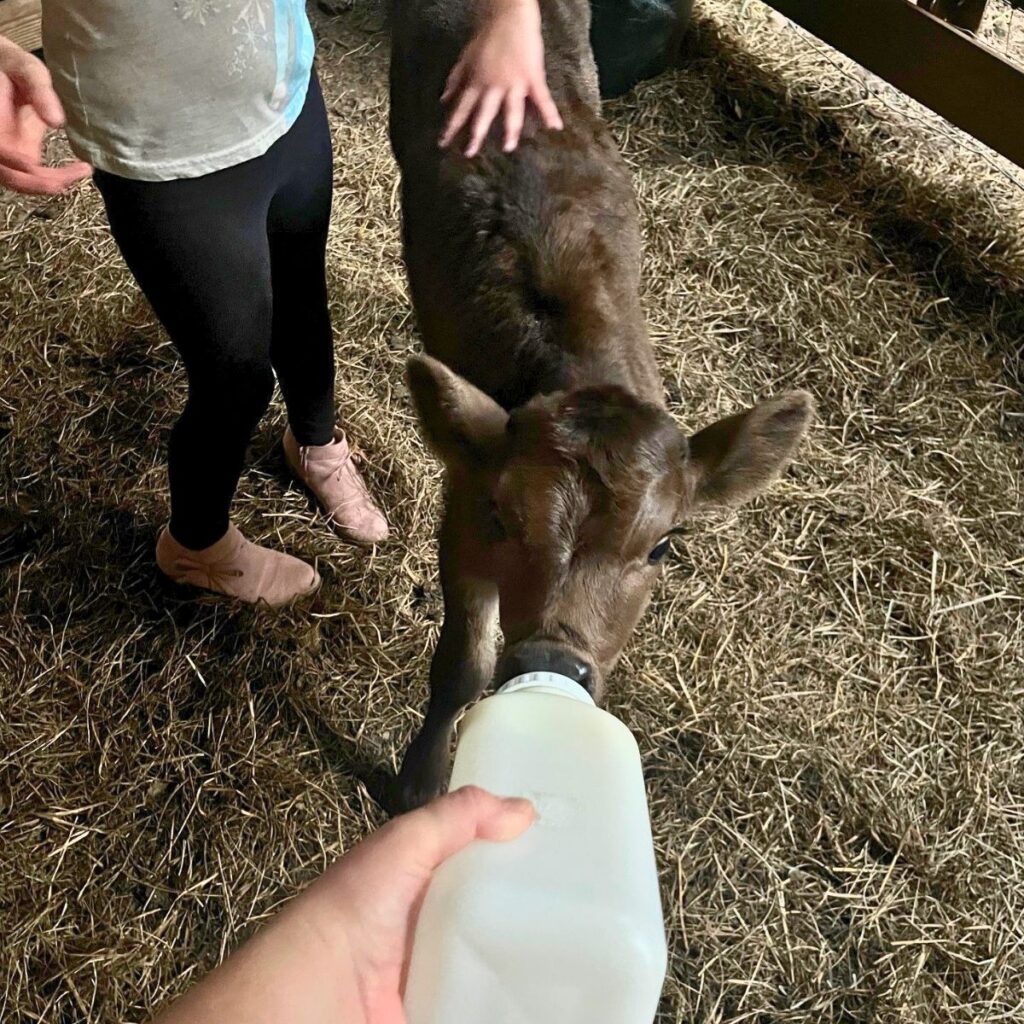
Newborn calves can drink between a half-gallon and a gallon of milk per feeding. Be sure to heat up your raw cow milk the right way so that the calf can get all the vitamins, nutrients, and antibodies available.
Heat up some of your raw dairy cow milk on the stove over medium-low heat, stirring constantly, until it reaches about 100°F (about 38°C). That’s about what the temperature would be if it came straight out of your mama cow. If the milk gets much hotter, it starts destroying the enzymes, antibodies, and nutrients that you need to keep.
Then pour the milk into a sterilized 2-quart calf bottle with screw-top nipple. A kitchen thermometer comes in handy. But if you don’t have one, just heat up the milk until it feels slightly warm to your finger.
Once your calf is more than a couple weeks old, they will likely be drinking close to a gallon of milk per feeding. We heat up and fill two bottles, and keep them warm in an insulated grocery bag when we bottle-feed calves.
Sometimes the bottle nipple is closed too much, and the calf gets upset when it can’t drink quickly from the bottle. If you find yourself with the same problem, just cut the nipple opening slightly bigger.
Most bottle nipples have an “X” opening at the top. I’ve found that a sharp kitchen knife works best to give it a larger opening. Simply insert the sharp tip of the knife into each of the “X” lines to make the opening slightly larger. Your calf will be happier, and it will take less time to bottle-feed.
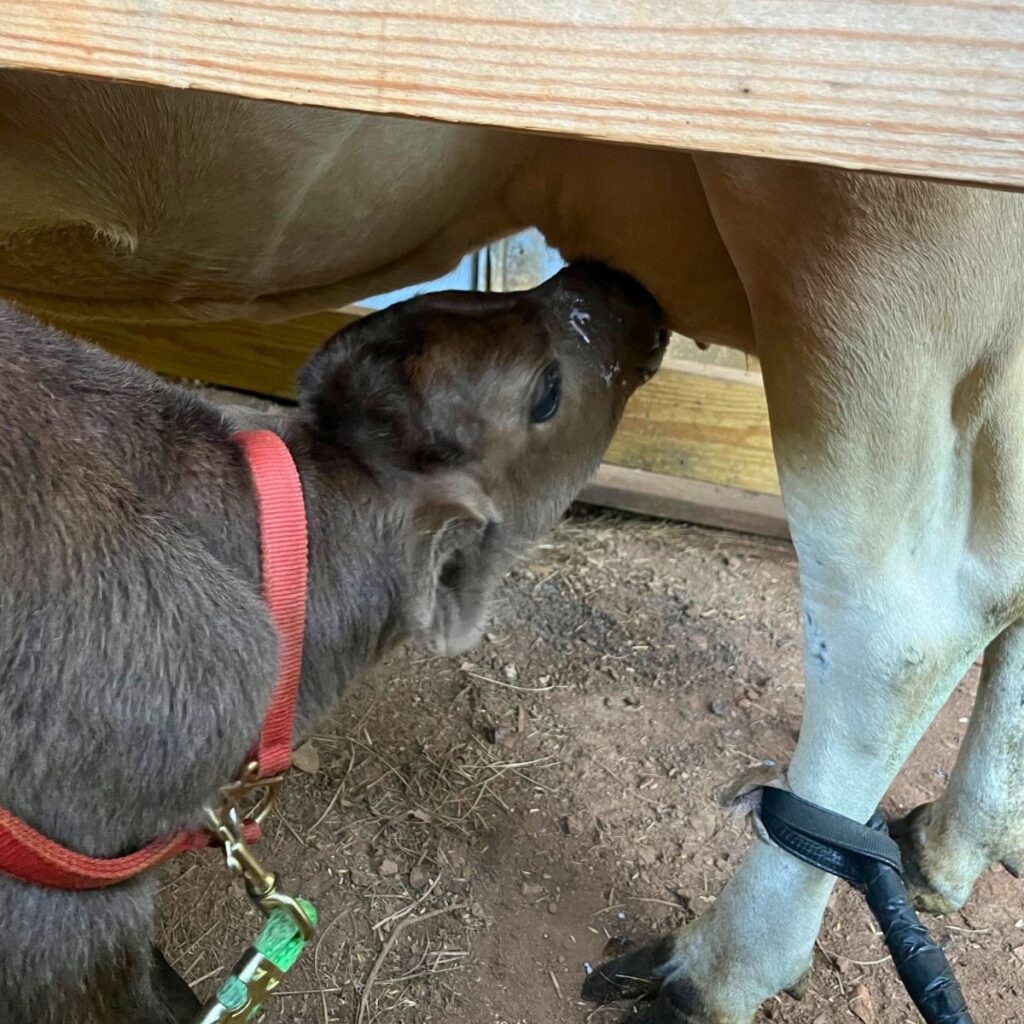
Guide the calf to nurse directly onto your dairy cow for at least a week.
Once the calf has been bottle-fed your dairy cow’s raw milk for a week, their bowel movements will look like a grainy orange/yellow mustard, and it will smell like your cow’s milk. She will notice when she smells the calf.
In order to get the calf to nurse directly from your dairy cow, I have found it best to put your dairy cow in her stanchion with her head locked in place, and to tie one of her legs to a nearby immovable post or pole.
Here are the details. It’s easiest to do this when two or more people can help.
When you graft a bottle calf onto a dairy cow, it’s also helpful to have some tools. First, strap a harness onto the calf and use a leash to walk it up to your dairy barn or stanchion. I haven’t found a calf harness design that I like, so we used an XXL dog harness and leash similar to this one.
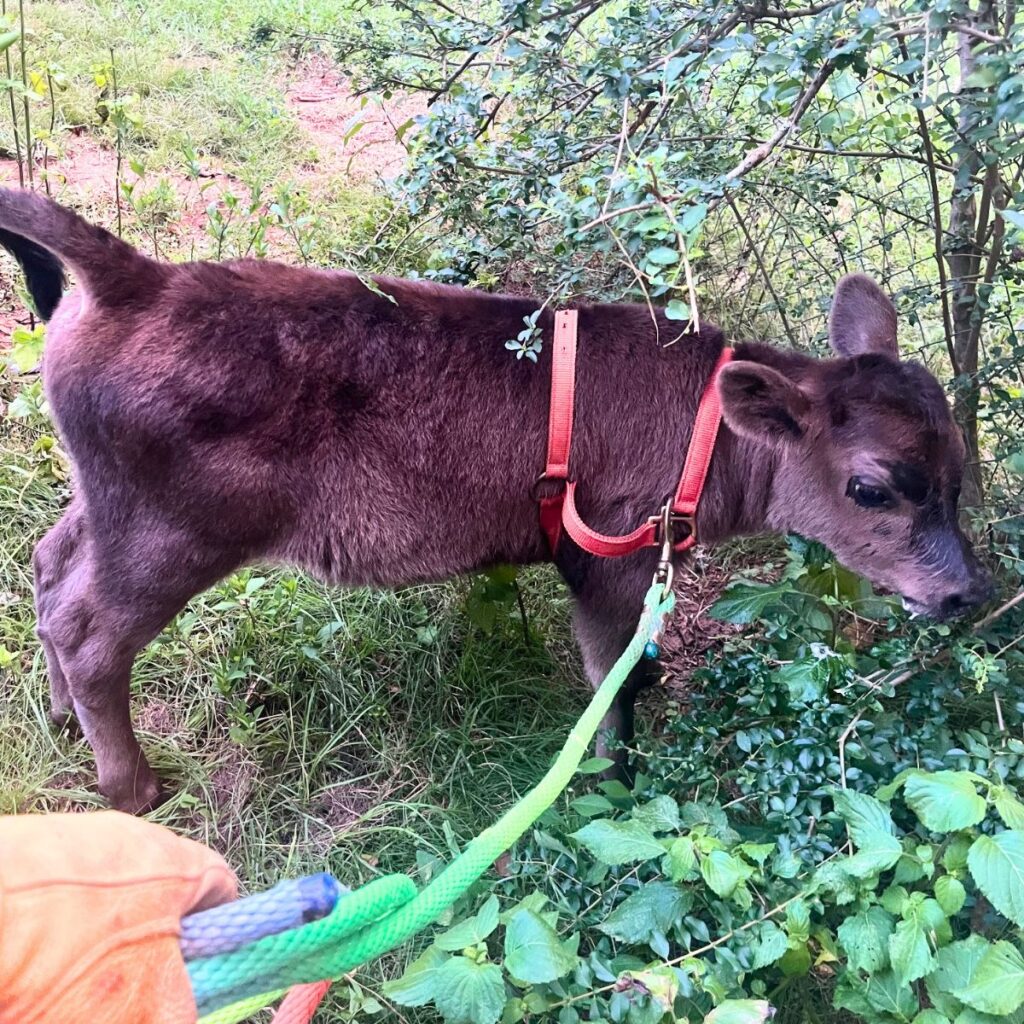
Once the calf is near the stanchion, it’s time to put your dairy cow into the stanchion and lock her head in place like you’re going to milk her. Then, it’s safest to strap a soft leash around the bottom of her nearest back leg to a nearby post so she can’t kick the calf or yourself.
There are other techniques and equipment that allege to keep a cow from kicking. But strapping the leg to a post works best for us and our cows.
Here’s how we do it.
How to strap a dairy cow’s leg to a post.
We use a regular dog leash, wrap an old towel around the leash near the handle loop part several times, and tape the towel into place.
We wrap the handle loop part around the bottom of our mama cow’s leg and feed the leash through the loop part so that it stays in place on her leg. This keeps the leash from cutting into or hurting your dairy cow’s leg if she attempts to kick the calf.
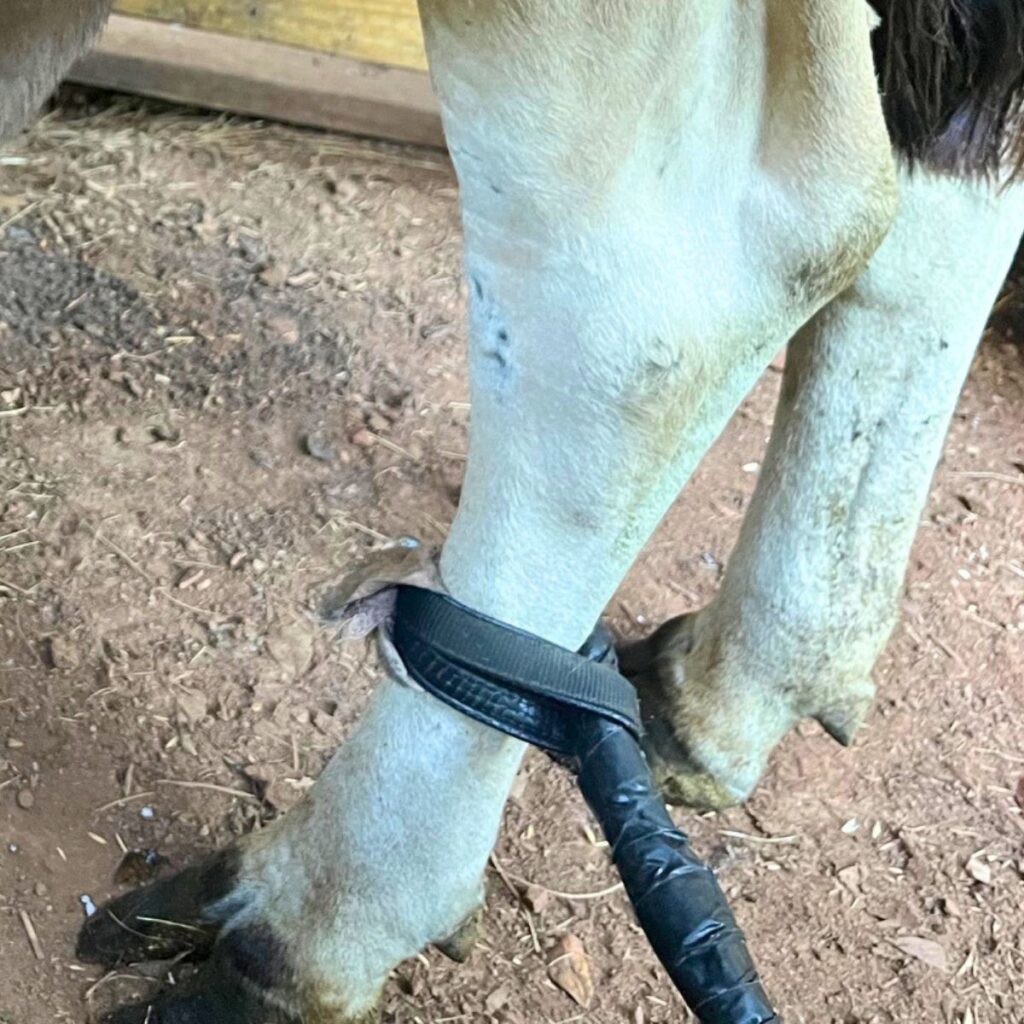
Then we wrap a nearby 4×4 post with some heavy duty chain, and clip the leash to the chain so that the cow can’t kick when we put the calf onto her. You want the leash from her leg to the post to be tight enough so that she can’t kick forward or sideways.
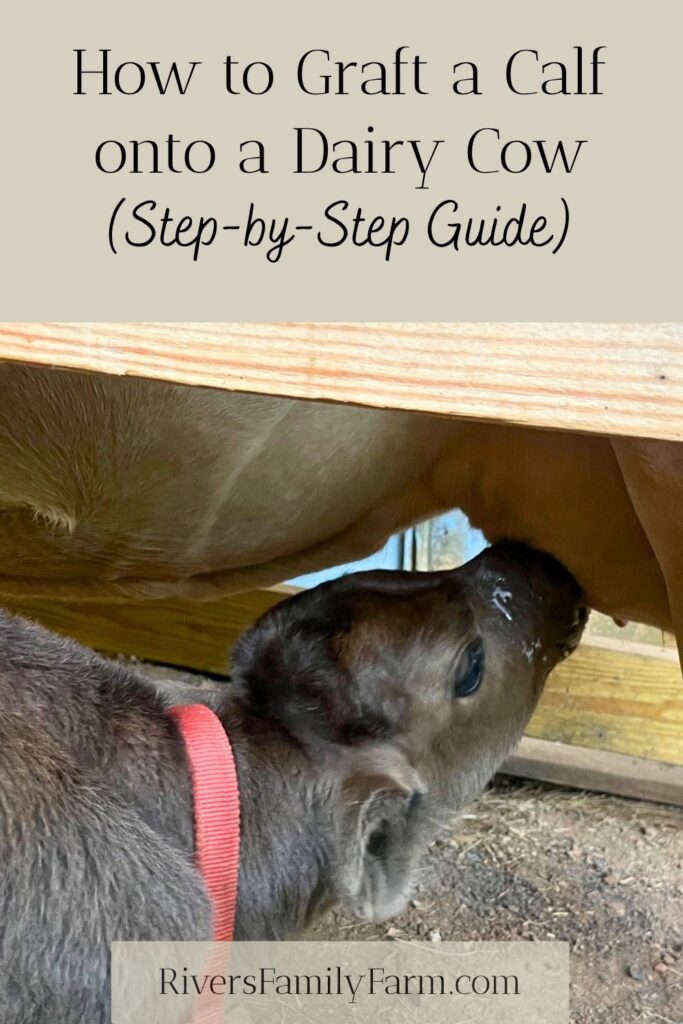
Once her leg is tied up, it’s safe to lead the calf to her. You may need to guide the calf’s head to her udder and squirt some milk onto the calf’s nose, but it will get the idea pretty quick and start nursing.
When the calf has had its fill of milk, you can lead it out of the dairy barn or let it explore the mama cow as long as she’s calm.
Knowing When You Have Success
After about a week of leading the calf to nurse directly from the dairy cow twice per day, you should have success. However, it may take longer for more stubborn cows to adopt a calf.
When we graft a bottle calf onto our dairy cow, they almost always tro to kick the new calf off. But over time, they get used to their new role as nurse cow. They eventually stop kicking and adopt the baby calf as their own.
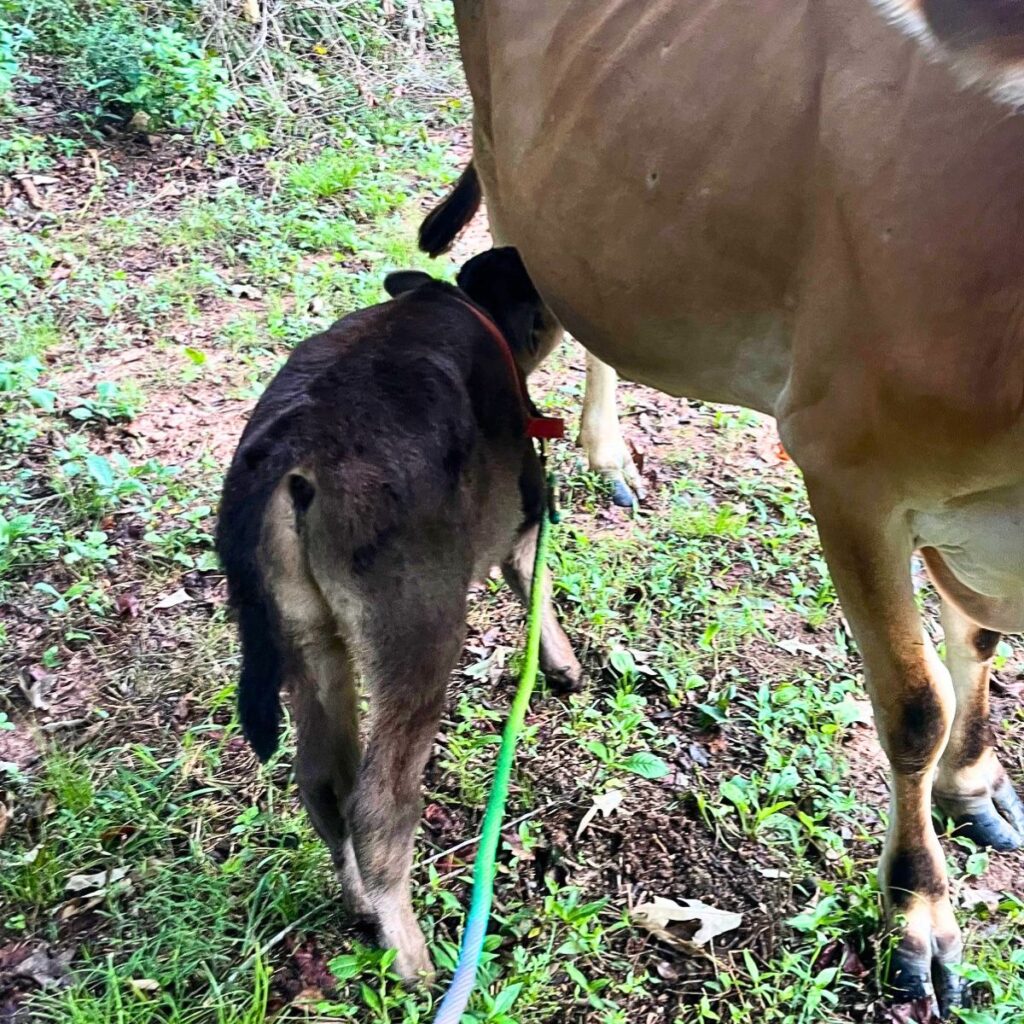
You’ll know that it’s safe to let your calf roam freely with your dairy cow when you repeatedly see the calf nurse successfully from your dairy cow and she doesn’t kick or try to get away.
Look for positive signs like your dairy cow licking the new calf. You should also see your dairy cow calling to the new calf, and the new calf responding.
Tips
Be sure to stockpile several gallons of your dairy cow’s milk before getting a bottle calf. Bottle calves can drink a gallon of milk in the morning and another gallon of milk in the evening.
Have a clean and secure barn stall prepared and ready before bringing a bottle calf to your farm. Once you bring a young bottle calf to your farm, it’s best to put him or her directly into a protected barn stall. Add some fresh hay for comfort.
It’s hard on babies to be separated from their mothers. Young calves like to snuggle up in big piles of clean hay for warmth and security.
Don’t use over-the-counter milk replacers if you can help it. You need your bottle calf to drink your dairy cow’s milk. After several days, the calf’s excrement will begin smelling like your dairy cow.
Include a bucket of clean water in the barn stall for your calf after they are 3 days old. Most of what the baby calf drinks should be raw cow milk. However, they should have access to fresh water, too. We use 5-gallon buckets, but use what you have available.
Allow your dairy cow to look at and smell the calf daily. Our barn stall doors only go up about 4 feet high. It’s high enough to keep calves safe and secure. But short enough for mama cows to come over and look at the calves. It’s important that your dairy cow has access to the calf if you want her to adopt it.
Shop This Post!
2-quart calf bottle with screw-top nipple