Breeding Freedom Ranger Chickens for Sustainable Flocks
Breeding Freedom Ranger chickens and raising your own meat birds is not any more difficult than keeping backyard egg-laying chickens. With the right setup and processes, anyone can do it! I’ll show you how we’ve been successful on our farm.
This post may contain affiliate links. Please read our disclosure policy.
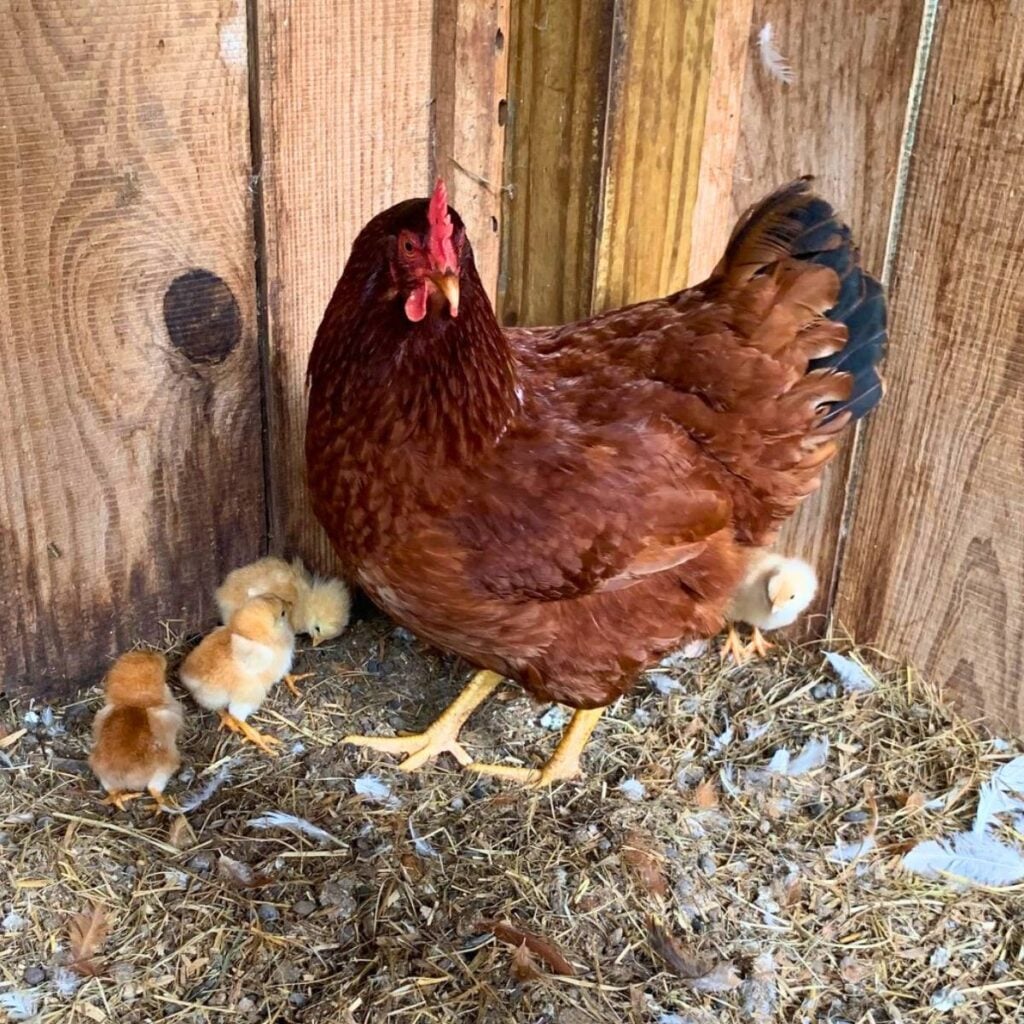
You want control over your flock, lower costs, and chickens that actually taste like chicken.
Breeding Freedom Ranger chickens gives you all three. These heritage-style meat birds have fast growth, forage hard, and produce tender, flavorful meat without the health disasters that come with Cornish Cross. But breeding them yourself means navigating fertility rates, incubation failures, and genetic bottlenecks that can wipe out a year of work in one bad hatch.
We raise chickens, turkeys, occasionally pigs and goats, and cows on our farm.
Having food security and the freedom to raise our food the way we want while avoiding the grocery store means the world to me. It’s the reason we moved out to our farm in the middle of rural Alabama in the first place. If you’re new around here and haven’t read my back story, check out my About Me page.
Most backyard breeders lose money in year two because they treat Freedom Rangers like laying hens. They are not. The rooster-to-hen ratio matters. Incubation humidity windows are tight. Brooding temps can make or break your chick survival rate.
I want to share how we breed and raise Freedom Ranger chickens. As the name implies, these chickens like to be free.
This guide walks you through our entire breeding system so you hatch healthy chicks, maintain strong genetics, and build a self-sustaining meat flock that saves you thousands over buying chicks every season.
What are Freedom Ranger chickens?
Freedom Ranger is the brand name of chickens bred specifically for meat production. They are a proprietary blend of 4 to 5 different breeds of heritage breed meat chickens and dual-purpose breed chickens like Delaware and Rhode Island Red.
They grow at a moderate rate and can reach 5-6 pounds in 9-12 weeks if they have the right environment. They’re also very good at foraging for their own food.
They produce brown eggs their first year and succulent meat. They are also a great alternative to fast growers if you can give them free range environments.
Most people that are looking to add their own meat chickens to backyard flocks have found Cornish Cross a popular option of chicken breed. Cornish Cross chickens are the industry standard and reach maturity and harvest size in 6-8 weeks. These are the most common roasters found in the grocery store in the United States.
While a lot of farmers like to grow Cornish Cross because of their fast growth and maturity, I had a bad experience with them and vowed to never raise them again.
Their voracious appetites never stopped. And since they were eating so much, they a rapid growth rate. More rapidly than slow-growing heritage breeds of chickens. Then their little legs gave out and they would have a heart attack because their huge bodies would not stop growing.
We got into Freedom Ranger chickens after that and we’ve never looked back.
The Freedom Rangers grew slower than the mutant GMO birds, but not as slow as true heritage breeds. From start to finish, Freedom Ranger chickens only need about 12 weeks to reach a nice harvest size.
Why Breeding Freedom Ranger Chickens is Better Than Buying Chicks
Buying chicks every season locks you into hatchery schedules, shipping stress, and zero control over genetics.
When you breed your own Freedom Rangers, you control the entire production cycle. You pick the healthiest, fastest-growing birds for breeding stock. You hatch chicks on your timeline, not the hatchery’s. Then you eliminate the per-chick cost that eats into your profit margin if you are selling meat or just trying to fill your freezer affordably. And you also increase your self sufficiency.
Where others rely on the grocery store or other farms for meat, you can grow your own!
Here’s what breeding Freedom Ranger Chickens gives you:
- Cost savings: After your initial investment in breeding stock and an incubator, every chick you hatch costs pennies instead of three to five dollars per chick from a hatchery.
- Genetic control: You can select for traits you want like faster growth, better foraging instincts, calmer temperament, or stronger leg structure.
- Flock health: You avoid shipping stress, disease exposure from mixed hatchery batches, and the mystery of what vaccines or medications chicks received before arriving at your door.
- Sustainability: A well-managed breeding flock produces chicks year after year without relying on external suppliers. That’s a good thing if one of your goals is self sufficiency.
If you process 50 to 100 birds a year, the savings add up fast. And if you are scaling beyond that, a breeding program is the only way to keep costs manageable while improving the quality of your flock generation after generation.
Selecting Your Freedom Ranger Breeding Stock
Your breeding stock determines everything. Pick weak birds and you will hatch weak chicks.
Freedom Rangers are a hybrid breed developed for meat production with better foraging ability and slower growth than Cornish Cross. They reach processing weight at 9 to 11 weeks and handle pasture systems better than any commercial broiler. But not every Freedom Ranger should go into your breeding pen.
Breeding Freedom Ranger chickens is easily done, but the babies may grow up to be slightly different from the parents. They will still be meat chickens, though, and they will still taste amazing when you harvest them. The hens also lay eggs with nutrition because of their ability to forage well on insects and seeds.
You will have to order your initial stock of Freedom Ranger chickens from a hatchery, or else buy it from a local seller. Freedom Ranger Hatchery and Cackle Hatchery offer straight run Freedom Ranger chickens online and will ship day old baby chicks to your local post office.
Be careful to purchase Freedom Ranger chickens and not Red Rangers. Red Rangers are a different breed of backyard meat birds with more dark meat than Freedom Ranger birds, and the meat tastes more like turkey than chicken.
After you raise the chickens to maturity, select your best rooster(s) and hens. Ones with traits you like.
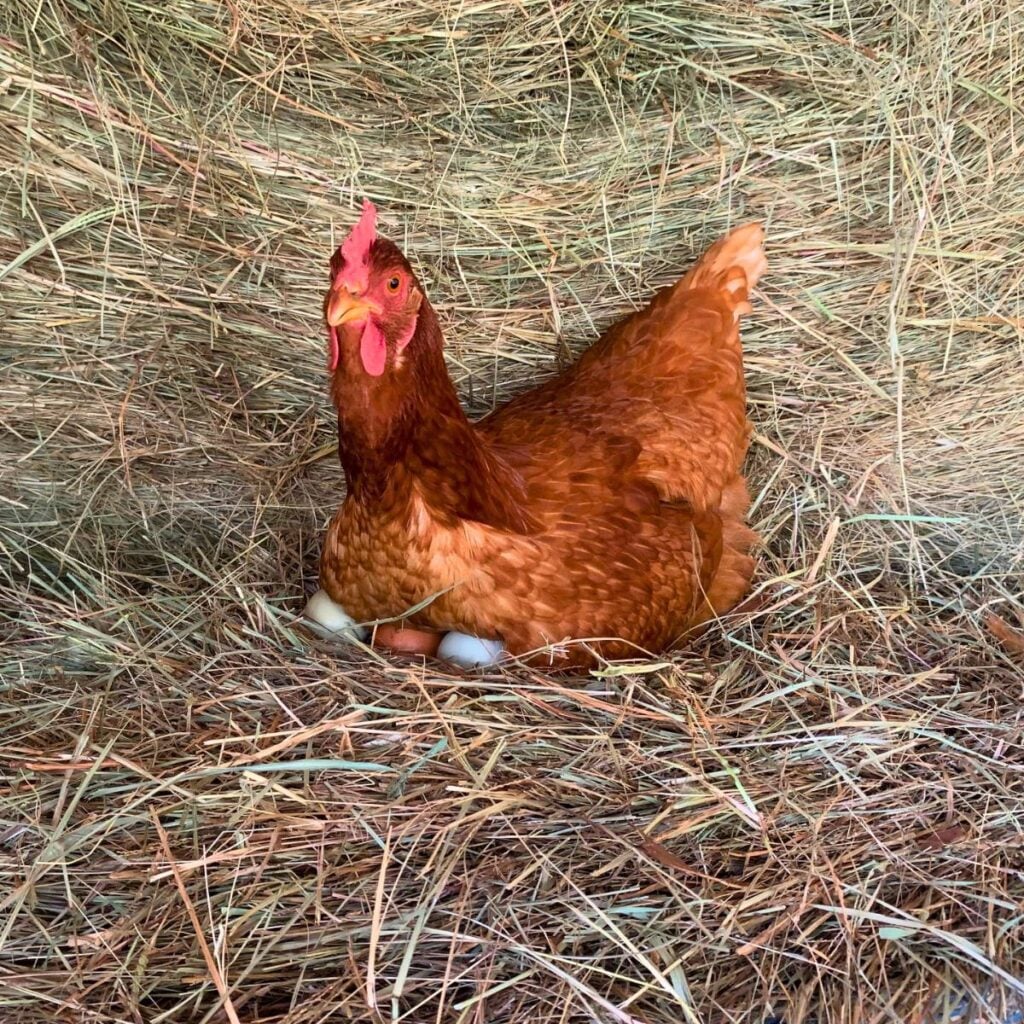
What to look for in breeding freedom ranger chickens – hens:
- Body structure: Wide, deep breast. Strong legs with no signs of joint issues, leg problems, limping, or other health issues. Good muscle development across the thighs and drumsticks.
- Feather quality: Full, clean plumage with no bald patches or excessive feather loss. Healthy feathers signal good nutrition and low stress.
- Foraging behavior: Pick hens that are good foragers that like to scratch and move around the pasture. Lazy birds produce lazy offspring.
- Temperament: Avoid overly aggressive or skittish birds. Calm, steady hens are easier to manage and pass those traits to their chicks.
- Broody: Pick broody hens that are good egg layers. This is especially important if you would rather skip purchasing incubators and allow mama hens to raise their own young chicks.
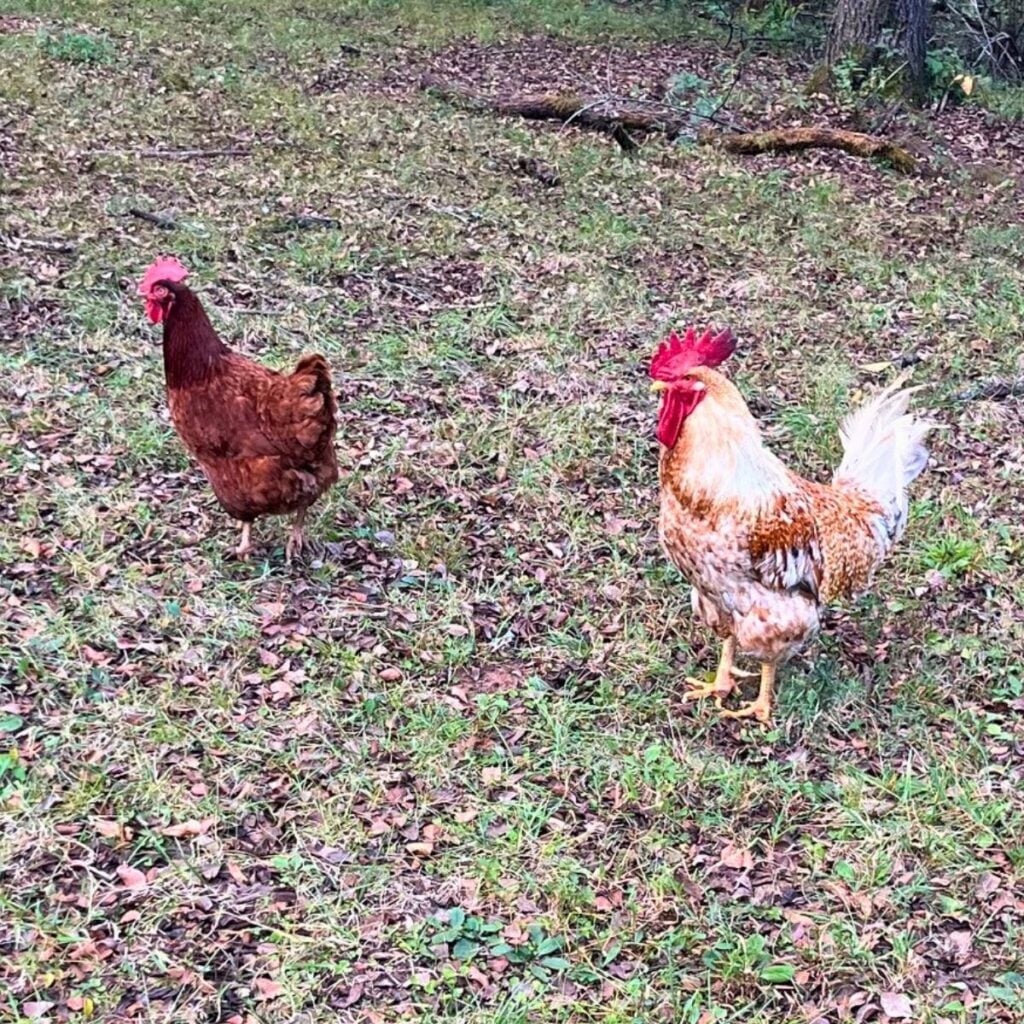
What to look for in breeding freedom ranger chickens – roosters:
- Vitality: Active, alert, and protective of the flock. A good rooster keeps hens moving and monitors for threats.
- Conformation: Broad chest, strong legs, upright posture. He should look like the ideal Freedom Ranger, not a runt or an oversized oddball like Jersey Giants.
- Fertility signs: Bright red comb and wattles. Healthy, active mating behavior without over-breeding that injures hens.
Rooster-to-hen ratio matters more than most breeders think. Too many roosters and your hens get over-mated, stressed, and injured. Too few roosters and fertility rates drop. The ideal ratio is one rooster for every 10 to 12 hens. If you are running a smaller breeding flock or don’t have much space, one rooster for every 8 hens works fine.
Keep your breeding stock separated from your grow-out birds. Mixing them stresses the breeders and lets lower-quality genetics sneak into your program.
We like to let all our chickens forage together up until we are ready to breed them. Then when we want to start collecting eggs for incubation, we will coop up our breeding hens and use their eggs in the kitchen over the next 3 weeks. This helps us avoid incubating eggs with off-genetics.
After the hens have been cooped for 3 weeks, we will put our breeding rooster into the coop with them. He will do his job and we immediately start collecting and incubating the fertilized eggs.

Housing and Managing Your Breeding Flock
Freedom Rangers are active foragers, so they need space.
Cramped quarters kill fertility, increase stress, and lead to aggressive behavior that damages your breeding stock. A well-designed breeding pen gives your birds room to move, access to fresh pasture, and shelter that protects them without restricting airflow.
- Coop space: Provide 4 square feet per bird inside the coop. This is higher than standard recommendations because breeding stock needs more room to reduce stress and aggression.
- Pasture access: Freedom Rangers thrive on pasture. Give them at least 50 square feet per bird in a rotational grazing setup or a large fixed run. Fresh forage boosts nutrition and keeps birds active.
- Nesting boxes: Offer one nesting box for every 4 to 5 hens. Line them with clean straw or wood shavings and keep them in a darker, quieter section of the coop to encourage hens to lay there instead of hidden spots outside.
- Roosts: Provide sturdy roosts set 2 to 3 feet off the ground. Freedom Rangers are heavier than laying breeds, so use wider boards (2x4s work well) to support their weight without causing foot injuries.
- Dust baths: Free range chickens enjoy taking dust baths. Be sure to give them a space just for that. This helps keep mites or other infestations away, and it keeps your birds happy and healthy.
Feeding your breeding flock is not the same as feeding grow-out birds.
Breeders need a high-quality layer feed with 16 to 18 percent protein, added calcium for strong eggshells, and access to grit for digestion. Supplement with cracked corn or scratch grains in winter to maintain body condition, but avoid overfeeding. Fat hens have lower fertility rates.
Collect eggs twice a day to keep them clean and reduce the chance of hens going broody in the nest. Really dirty or cracked eggs should not go into the incubator. If the egg is only slightly dirty, use a slightly dampened cloth to spot clean the shell.

Incubating Freedom Ranger Eggs for Maximum Hatch Rates
Your incubator setup determines whether you get 50 percent hatch rates or 85 percent or higher hatch rates.
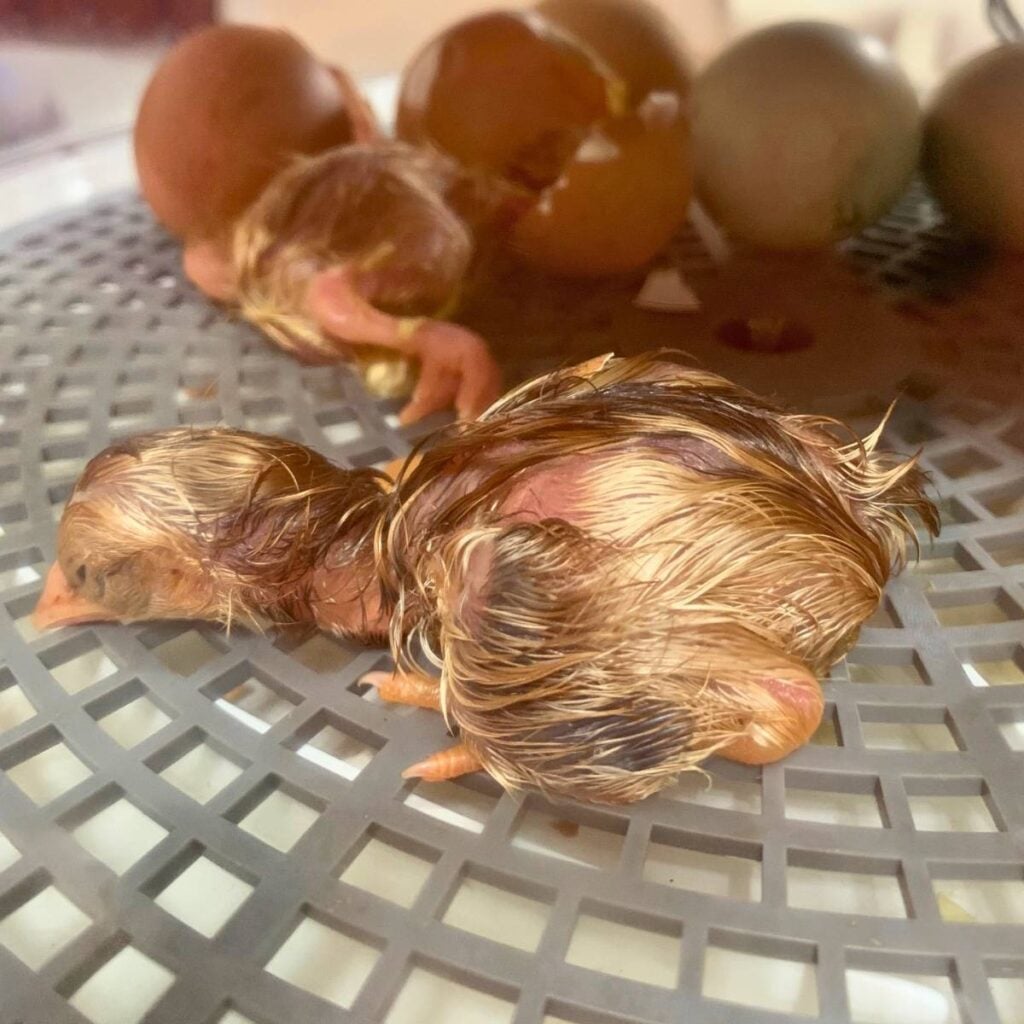
Freedom Ranger eggs take 21 days to hatch, just like most chicken breeds. But small mistakes in temperature, humidity, or egg handling can destroy entire batches before you see a single pip.
Temperature: Hold steady at 99.5 degrees Fahrenheit for forced-air incubators or 101 to 102 degrees for still-air models. Even a two-degree swing can kill developing embryos or cause late-stage deaths.
Humidity: Keep humidity at 40 to 50 percent for the first 18 days, then increase to 65 to 70 percent during lockdown (the final three days before hatching). Too much humidity early on drowns embryos. Too little and chicks cannot pip through the membrane.
Turning: Turn eggs at least three times per day, or use an automatic turner. I personally like the Harris Farms Nurture Right Egg Incubator. We have six of them. Turning prevents the embryo from sticking to the shell membrane. Stop turning on day 18 when you enter lockdown.
Egg selection matters before they ever go in the incubator. Only incubate eggs that are clean, uniform in size, and free from cracks or thin spots. Avoid oversized or undersized eggs. They hatch poorly and produce weak chicks.
Candle your eggs on day 7 and day 14 to remove clear or dead-in-shell eggs. Leaving dead eggs in the incubator increases bacteria and contaminates the air quality for developing chicks.
Do not open the incubator during lockdown. Every time you crack the door, you lose humidity and temperature stability. Chicks that are pipping need consistent heat and moisture to break free from the shell. Interrupting that process kills chicks that would have hatched successfully.
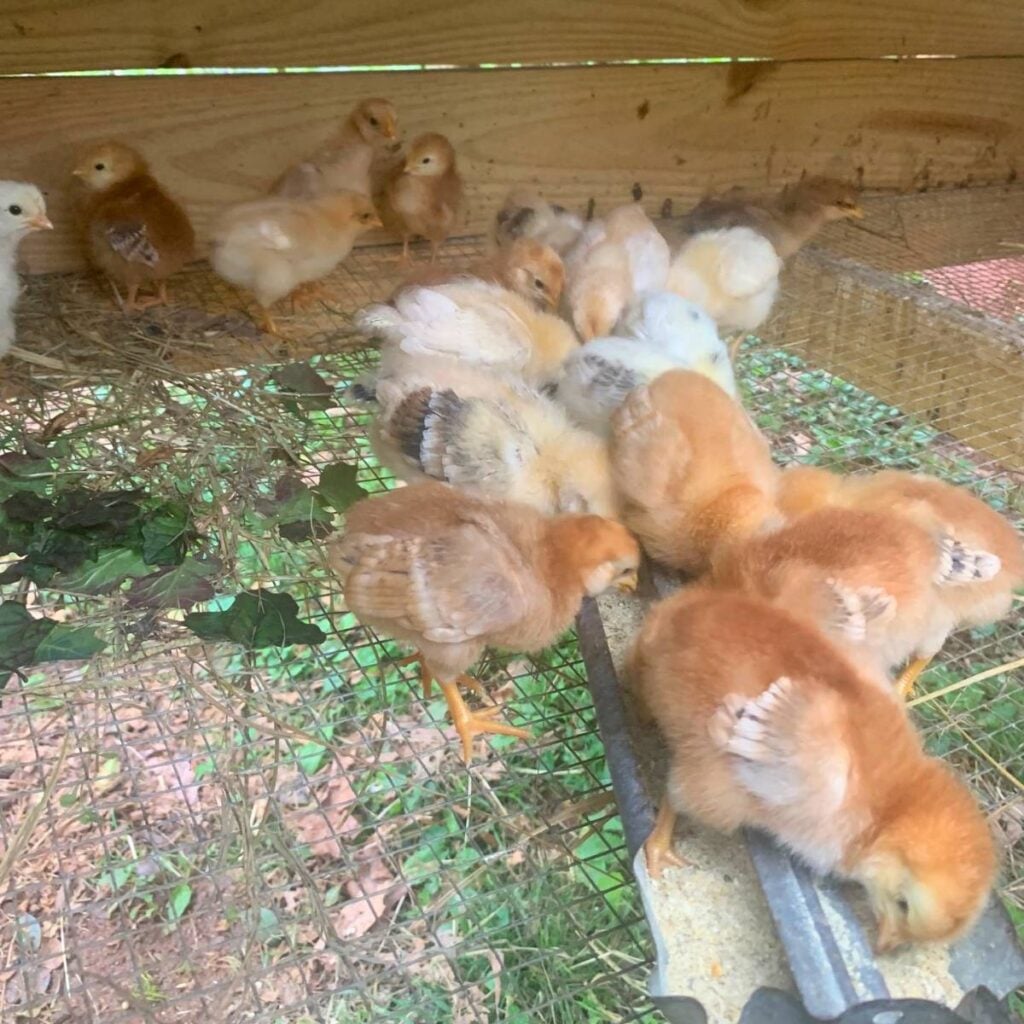
Brooding Freedom Ranger Chicks
The first two weeks are where most chick losses happen.
Freedom Ranger chicks are hardier than Cornish Cross, but they still need precise heat, clean water, and high-protein starter feed to survive and thrive. Get the brooder setup wrong and you will see health problems like pasty butt, leg issues, and unexplained deaths.
Heat: Start chicks at 95 degrees Fahrenheit during week one. Drop the temperature by 5 degrees each week until they are fully feathered at 5 to 6 weeks old. Use a heat lamp or a brooder plate. Watch chick behavior. If they huddle directly under the heat source, they are too cold. If they avoid the heat and spread to the edges, they are too hot.
Bedding: Use pine straw or pine shavings, not cedar. Cedar oils are toxic to chicks. Avoid slippery surfaces like newspaper that cause spraddle leg. Add a layer of paper towels over the shavings for the first few days so chicks can get stable footing while they learn to walk and eat.
Water: Provide clean, room-temperature water in shallow dishes or chick waterers. Remember, if it’s not clean enough for you to drink it, it’s not clean enough for your baby chicks to drink it.
Dip each chick’s beak in the water when you first place them in the brooder so they know where to drink. Add a splash of apple cider vinegar (1 tablespoon per gallon) to support gut health, but skip it if you are using medicated feed. I would personally avoid medicated feed, though. If you get everything else right, you’ll have healthier birds anyway.
Feed: Use a 20 to 22 percent protein chick starter for the first 4 weeks. Freedom Rangers grow fast, and they need that protein to build strong bones and muscle. After 4 weeks, switch to an 18 percent grower feed. Avoid medicated feed if you plan to process birds early or want to keep them organic.
Space: Give chicks at least 0.5 square feet each for the first two weeks, then increase to 1 square foot as they grow. Crowding leads to pecking, stress, and trampling injuries.
Watch for pasty butt in the first week. It is when droppings stick to the vent and block waste elimination. Gently clean it with warm water and a soft cloth. If left untreated, chicks die within 24 to 48 hours.
Common Breeding Mistakes That Kill Your Program
Even experienced breeders make these errors. Catching them early saves your flock.
Using the same rooster for too many generations. Inbreeding crashes genetic diversity, weakens immune systems, and introduces deformities. Rotate in a new rooster every 2 to 3 years from a different bloodline. You can buy a single male chick from a hatchery and raise him for breeding stock without starting over.
Breeding birds that are too young or too old. Hens under 6 months old lay small eggs with low fertility. Roosters under 6 months may not have full fertility either. On the other end, hens over 3 years old produce fewer eggs with declining hatch rates. Roosters lose vitality and fertility after age 3. Replace aging breeding stock before performance tanks.
Ignoring egg storage before incubation. Eggs lose viability the longer they sit. Store hatching eggs at 50 to 60 degrees Fahrenheit with the pointed end down. Do not incubate eggs older than 7 days. Every day past that drops your hatch rate by several percentage points.
Over-mating your hens. If you see hens with bare backs, broken feathers, or wounds from rooster spurs, you have too many roosters or one overly aggressive male. Injured hens stop laying, get infections, and sometimes die from deep spur wounds. Remove aggressive roosters immediately.
Skipping biosecurity. Bringing in outside birds, sharing equipment with other flocks, or letting wild birds into your pasture can spread disease. Even one sick bird can wipe out your breeding program. Quarantine new birds for 30 days before introducing them to your flock. Disinfect waterers, feeders, and incubators between hatches.
One mistake does not ruin everything, but stacking mistakes will. Stay ahead of these problems and your breeding program will run clean for years.
How Many Breeding Freedom Ranger Chickens Do You Actually Need
It depends on how many chicks you want to hatch per year.
A healthy Freedom Ranger hen lays about 150 to 180 eggs per year. Not all of those will be fertile, and not all fertile eggs will hatch. Assume a 75 to 85 percent hatch rate under good conditions. Electric incubators will give you a near 100 percent hatch rate, though.
Here’s the math:
If you want 100 chicks per year, and you hatch at an 80 percent success rate, you need 125 fertile eggs. If each hen gives you 150 eggs per year, that is roughly one hen’s production. But you want a margin for error, non-fertile eggs, and losses.
A safe starting flock for 100 chicks per year: 3 hens and 1 rooster. This setup accounts for variability in laying cycles, seasonal slowdowns, and any eggs you cannot use or want to use in your kitchen.
If you want 200 to 300 chicks per year for a small meat operation, start with 6 to 8 hens and 1 rooster. If your flock is larger, maintain that 10-to-1 hen-to-rooster ratio and scale up.
Keep records of which hens are laying, which eggs are hatching, and which chicks are thriving. Over time, you will identify your best producers and can cull the underperformers.
Costs of Breeding Freedom Ranger Chickens
Breeding your own birds has upfront costs, but the payoff happens fast.
Initial investment:
- Breeding stock (3 hens, 1 rooster): $60 to $100 if buying chicks, up to $200 if buying mature birds
- Incubator (quality cabinet or tabletop model): $50 to $300 depending on capacity and features
- Brooder setup (heat source, waterers, feeders): $50 to $100
- Coop and run modifications: varies, but plan for $100 to $500 if you need to upgrade space
Ongoing costs per year:
- Feed for breeding flock: roughly $20 to $30 per bird per year, so $60 to $120 for a small flock
- Chick starter feed: about $25 to $40 per 50-pound bag, and you will go through 1 to 2 bags per 50 chicks
- Electricity for incubator and brooder: $10 to $30 depending on your setup and local rates
- Bedding, supplements, and miscellaneous supplies: $50 to $100
Total first-year cost: Around $400 to $800 depending on your setup. After that, ongoing costs drop to $150 to $300 per year for a small breeding operation.
Compare that to buying 100 chicks at $4 each, which is $400 per year with zero control over genetics or timing. Breeding your own pays for itself in year two and keeps paying every season after.
If you process your own birds, the cost per pound of meat drops even further. Freedom Rangers dress out at 3.5 to 5 pounds at 9 to 11 weeks, giving you affordable, high-quality meat without buying chicks or paying processing fees.
Your breeding program becomes an asset instead of an expense. You control the inputs, the timeline, and the quality. That is the entire point.