
Cream Cheese vs Butter. What’s Healthier?
Cream cheese vs butter. Have you ever wondered which option is better and healthier? Butter and cream cheese are popular condiments that are eaten around the world. We’ll take a deep dive into the nutrition to see which one might be the better choice for you and your family. If you want to learn more, I wrote an article on how to make butter and how to make cream cheese from your home kitchen!
This post may contain affiliate links. Please read our disclosure policy.
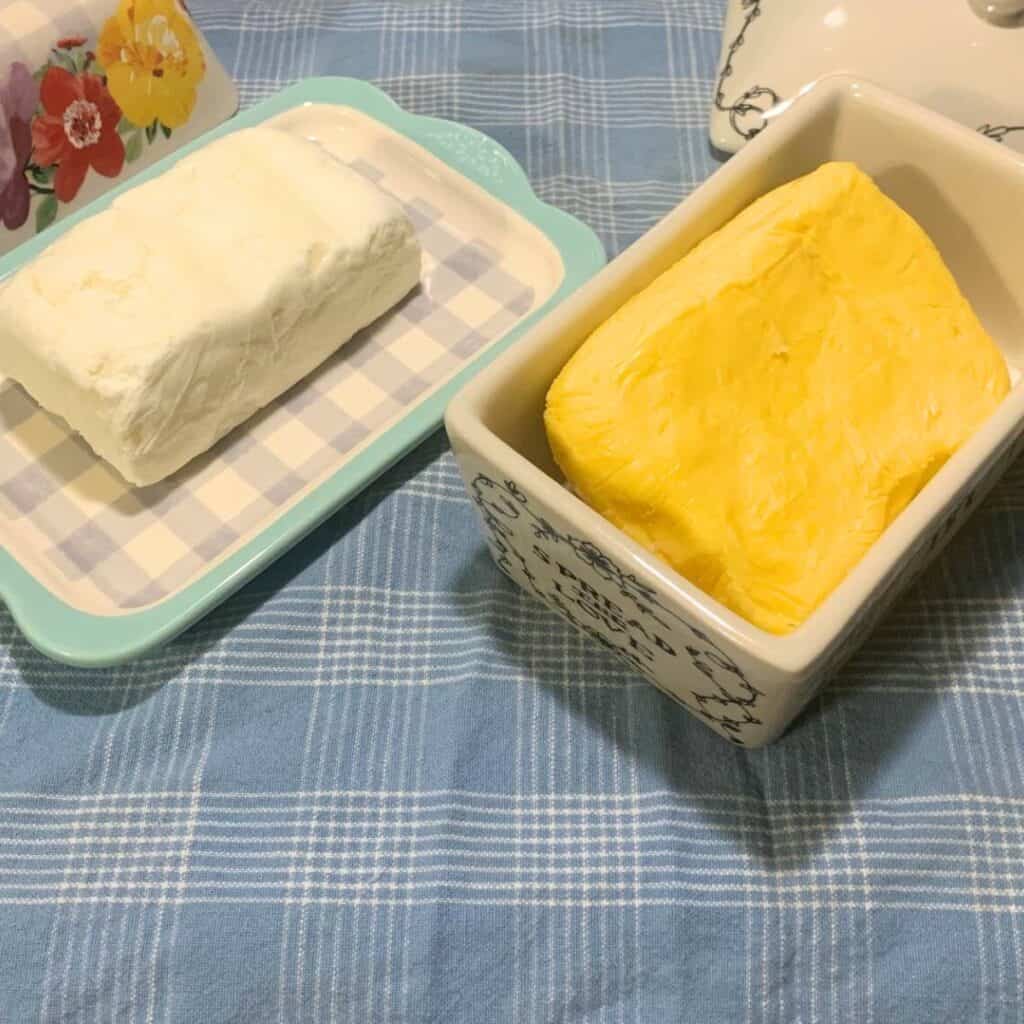
When it comes to dairy products, cream cheese and butter are in my top five favorites list. But not all cream cheese and butter are created equal.
If you have access to raw milk and sweet cream, try making your own cream cheese and butter. Homemade is the better option when compared to store-bought cream cheese and butter.
Not only does homemade raw milk butter and cream cheese taste better, but they have higher nutritional values!
I previously did a deep dive on the benefits of raw milk and raw cream if you want to learn more. Some of the highlights from multiple studies showed that consuming healthy fats like full-fat milk, full-fat yogurt, and full-fat cheese reduced the risk of heart disease and protected against type 2 diabetes.
The bottom line is that full-fat dairy products are part of a healthy diet. What a relief!
If you don’t have access to raw milk, don’t worry. You can still get quality cream cheese and butter from the grocery store.
Cream Cheese vs Butter. Which one is healthier?
Both cream cheese and butter can be part of a healthy diet, but the healthier option is the cream cheese. The main difference are the grams of fat. The fat content of regular cream cheese is less than half of butter. Cream cheese also has fewer calories, more grams of protein, and more essential nutrients.
However, not all dairy fats are created equal. Animal products from grass-fed animals have a more balanced amount of fat. The unhealthy saturated fats are lower and the healthy monounsaturated fat and polyunsaturated fat is higher in grass-fed animal products.
What are the health benefits of cream cheese?

The health benefits of cream cheese include calcium, protein, and beneficial vitamins, minerals, and enzymes. When compared to whole milk, cream cheese rivals the calcium content of milk per ounce!
Cream cheese has 224 mg of calcium per 8 ounces, and whole milk has 257 mg of calcium per 8 ounces. Also, when compared to butter, cream cheese has a lower calorie content, which makes it the best option if you’re watching calories. You can also purchase light cream cheese which is another popular choice.
Additionally, whole milk has 7.6 g of protein per 8 ounces, and cream cheese has 13.6 g of protein. However, whole milk only has 145 calories per 8 ounces and standard cream cheese has 776 calories per 8 ounces. But then, who on earth would ever eat an entire 8-ounce block of cream cheese?
We make our own full-fat cream cheese on the farm during seasons when we’re drowning in raw cow milk. If you want to learn how to make your own cream cheese, I wrote an easy tutorial. It’s such a delicious and simple process. Just a few minutes of work is all you need.
When you make your own cream cheese, you get to control the recipe. Unless you have a full lab analysis of your raw milk cream cheese, you don’t really know what the exact nutrition measurements are. Each cow is different, and seasonally, her milk is also different.
However, raw milk cream cheese will have all the alive enzymes that are present in raw milk, and the vitamins and minerals will be higher than store-bought varieties.
Our ancestors would turn their milk into various cultured cheeses to preserve the nutrition for when their cow was dry, and to even increase the nutrients when it was cultured.
You can decrease the amount of calories and fat by selecting or preparing low-fat cream cheese and reduced-fat cream cheese. It will still have a creamy taste and creamy texture.
What are the health benefits of butter?

The health benefits of butter from grass-fed cattle include that it’s lower in saturated fats and higher in unsaturated fats. Studies have shown that eating grass-fed butter in moderation may have more benefits and fewer risks than eating standard butter.
Additionally, when you use raw cream that hasn’t been pasteurized, your butter will have all of the alive enzymes that are present in your raw milk!
Grass-fed butter is also a rich source of vitamin A and vitamin K, omega-3 fatty acids, conjugated linoleic acid (antioxidant), and butyrate (important for colon health).
We make our own butter on the farm. If you’d like to learn how to make your own unsalted butter or compound butter, read this post! It’s a very simple process, too. (Nothing I do is that complicated.)
Full-cream butter is what I make and use, but you can also make and use a lower calorie option such as light butter if you’re watching your calorie intake. Just mix your full-fat butter with healthy olive oil or other vegetable oils and a pinch of salt. Then whisk it together until it’s light and airy to make a spreadable butter.
Butter has been blamed for heart disease in the past, but it is now considered a healthy fat. Especially if it’s from a grass-fed dairy animal.
If you have lactose intolerance, use seed butters or vegan butter in place of butter.
Nutrition Comparison of Cream Cheese vs Butter
The healthiest option will depend on your health goals, dietary needs, the type of cream cheese you can find, and the different types of butter you can find.
However, when simply comparing regular cream cheese against regular butter from the grocery store, the best choice for weight loss would be to select small amounts of cream cheese over butter. The protein content will help you feel full and satisfied. You can also select a reduced-fat product if you’re concerned about the fat content.
| Full Fat Cream Cheese (100 g) | Unsalted Butter (100 g) | |
|---|---|---|
| Calories | 343 kcal | 717 kcal |
| Protein | 5.79 g | 0.85 g |
| Cholesterol | 101 mg | 215 mg |
| Total lipid (fat) | 33.5 g | 81.1 g |
| Calcium | 97 mg | 24 mg |
| Potassium | 125 mg | 24 mg |
| Sodium | 368 mg | 10 mg |
| Vitamin A, IU | NaN | 2,500 IU |
| Fatty Acids, saturated | 19.7 g | 50.5 g |
| Fatty Acids, unsaturated | 6.92 g | 23.4 g |
Keep in mind that homemade cream cheese and homemade unsalted butter nutrition will vary from the above chart.
When I make cream cheese, I use raw milk, culture it, and then strain out the liquids. I never add any salt to my cream cheese, so there’s no sodium in my homemade version.
Likewise, I never add salt to my unsalted butter. While store-bought unsalted butter may have some sodium, my homemade butter doesn’t have any sodium.
And there are likely more vitamins in both homemade versions because our dairy cow grazes on green pasture.
Cream Cheese vs Butter: Final Thoughts
My opinion is that cream cheese and butter should both be part of a balanced diet. But my personal preference is to choose butter over cream cheese for most foods and meals.
We use cream cheese to make cream cheese frosting (a necessity for red velvet cake) and cream cheese sugar cookies. (The tangy flavor adds a delicious surprise to those sugar cookies!)
We use butter in a myriad of recipes. Traditional buttercream frosting is a hit on birthday cakes. Room temperature butter is also an important ingredient when we make Thanksgiving popcorn balls, which is our family tradition. Pretty much any sweet dessert calls for using at least some butter.
More Recipes from the Farm
- Ham, Potato, and Cheese Casserole Recipe
- Best Cooking Fat to Use: Butter vs Bacon Grease
- Easy Homemade Butter: How to Make and Store It
- How to Make Cream Cheese
- The Best Cream Cheese Sugar Cookies

We love butter in this house and don’t often have cream cheese – must give it a try thanks
You’re very welcome!
I love butter and I certainly love cream cheese! This is a very informative post and I am looking forward to making a homemade version soon! Thanks for all the detailed information.
I love both butter and cream cheese, as well! You’re very welcome.
This was so interesting to read, looks like cream cheese is healthier but then I looked at how much sodium it has so butter is better. I like them both but use butter more for baking. Now I have to read your post on how to make cream cheese! Thank Rebekah
You’re welcome! Yes, if you’re cooking for someone on a salt-restrictive diet, you want to stick with unsalted butter and make or buy reduced-sodium cream cheese. I don’t add any salt when I make my own cream cheese, and that’s one of the reasons I make our dairy products.