Is Butter Dairy Free? Best Dairy-Free Substitutes.
Is butter dairy free? I’m going to share everything you need to know if you’re looking for replacements for butter, including my favorite dairy-free alternatives. So if you’re on a strict vegan diet or have a dairy sensitivity or dairy allergy, this post is for you. You may also be interested in an article where I compare the smoke points of different traditional fats and cooking oils.
This post may contain affiliate links. Please read our disclosure policy.
When it comes to cooking for my family, I choose traditional and healthy cooking fats and oils. I avoid margarine brands, artificial colors, and chemical food coloring. The way I figure it is if I’m taking the time to cook for my family, it has to be delicious and bring health to our bodies.
I don’t have any dairy allergies myself, but I do occasionally prepare vegan foods like my easy 3-ingredient homemade biscuits recipe. That’s why it’s important to know what is allowed and what is not allowed in vegan cooking and if you’re on a dairy-free diet due to food allergies.
Is Butter Dairy Free?
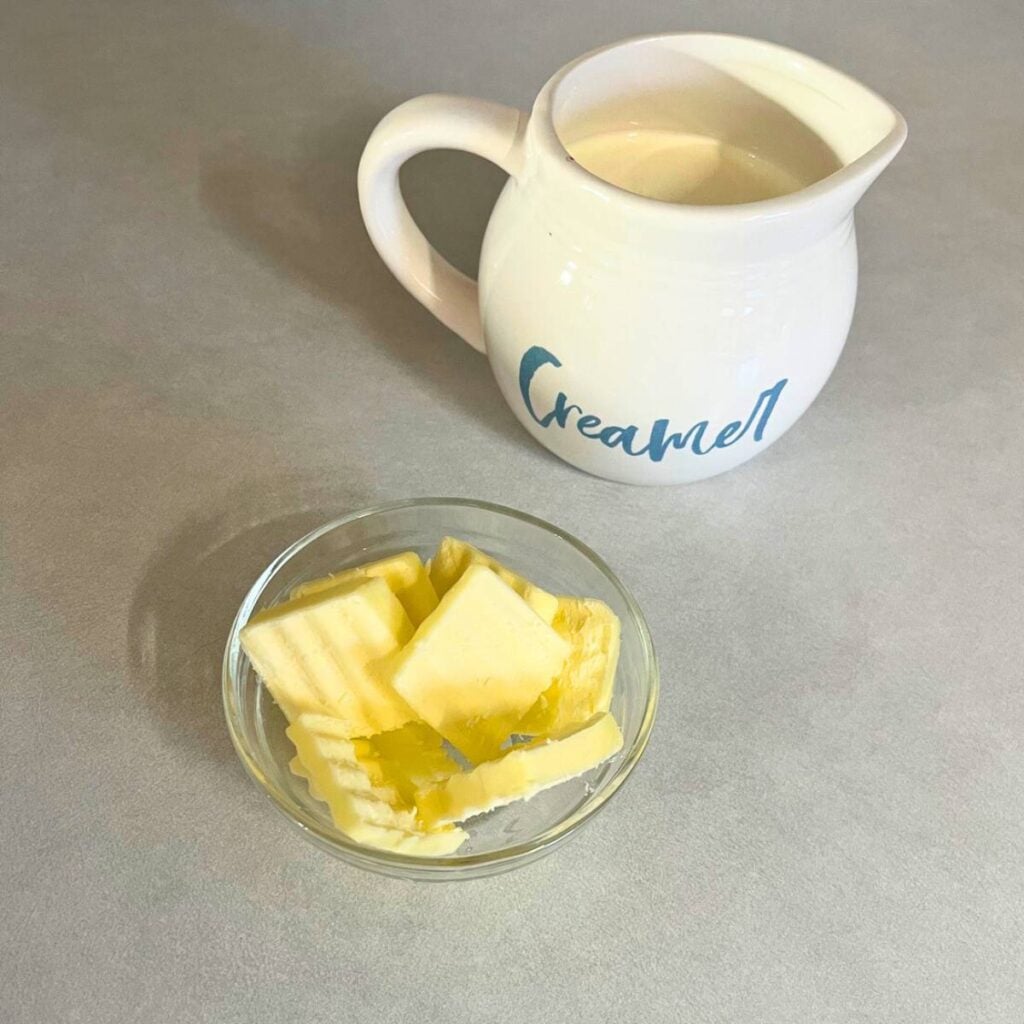
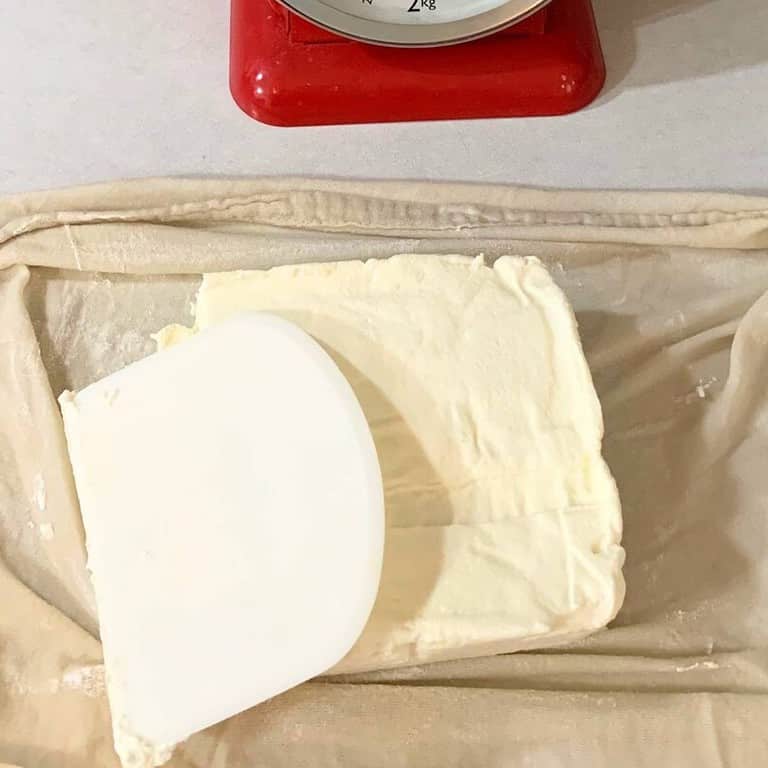
No, butter is not dairy free. It is a form of dairy. Regular butter from grocery stores is a dairy product made from sweet cream, which is the highest butterfat portion of cow’s milk. There are milk solids in the fat content of traditional butter along with lactose.
If you have lactose intolerance, you should avoid traditional butter. However, there are dairy-free alternatives. Read the food labels or ingredient list carefully and look for dairy free butter substitutes like lactose-free butter, dairy-free butters, vegan butter, and plant-based butters.
The Truth About Butter

Butter is a traditional and healthy fat to use unless you have dairy allergies or otherwise want to exclude animal products or animal byproducts from your diet.
There has been some fear spread in the past touting the harm of consuming butter, but doctors and scientists in recent years admit that butter is a healthy fat that can be eaten in moderation. Especially if it’s organic, grass-fed butter.
If you want to learn more about butter, I wrote an article on how to make and store butter so that it lasts a long time.
This post contains affiliate links, which means I make a small commission at no cost to you. See my full disclosure here.
Best Dairy-Free Substitutes
If you’re looking for plant-based ingredients for a dairy-free diet, there are many options to choose from. I’ll go over each of my personal preferences and let you know how to use them. I’ll also share my favorite recipes along the way.

Avocado Oil
If a recipe calls for butter, chances are good that you can replace it with an equivalent amount of avocado oil. I use avocado oil a lot in baking recipes that call for butter where I want a neutral flavor that won’t overpower the baked goods. My chocolate chip pumpkin bread recipe is a good example of me using avocado oil in a quick bread recipe.
Avocado oil is considered a type of vegetable oil, so it’s great when you want to heat foods up super high, like deep frying. It has a smoke point of 520°F. It’s mostly made up of unsaturated fats, which makes it a great option if you’re trying to eat a heart-healthy diet.
However, you probably don’t want to use avocado oil in things like pastry dough. Pastry dough uses regular dairy butter or a mixture of butter and lard to get a rich flavor and flaky crust.
Olive Oil
Olive oil is a very versatile cooking oil to use for sauteing vegetables or roasting vegetables. It’s also standard for making different dressings.
I particularly like to drizzle olive oil over carrots and potatoes when I roast them with other root vegetables in the oven. I also use olive oil in my easy sandwich bread recipe.
Olive oil is considered a type of vegetable oil even though it comes from the fruit, the olive. There are many health benefits of olive oil. Since it is minimally processed, it retains a lot of essential nutrients like oleacein, oleocanthal, and vitamin E.
Some olives and brands are different, but extra virgin olive oil has a smoke point between 350°F – 410°F. Regular olive oil can get between 390°F – 470°F before it starts to smoke.
Coconut Oil
I love using coconut oil, but not all coconut oils are the same. My family and I enjoy the flavor of coconut, so we usually buy cold-pressed and unrefined coconut oil. But if you want an oil without the flavor, choose the refined coconut oil version.
I use coconut oil in my quick, fried, seasoned potatoes recipe and my German chocolate cake recipe. I also use coconut oil to pop popcorn on my stove and in my popcorn balls recipe. Instead of buttered popcorn, this is a delicious alternative.
Unrefined coconut oil has a smoke point of 350°F. Refined coconut oil has a smoke point of 400°F, and it doesn’t have a coconut smell or flavor.

Coconut Cream
Coconut cream is a great alternative to butter and heavy cream if you want to make a classic white sauce or roux to thicken up sauces, soups, and stews. Especially if you want to add a rich, slightly sweet and slightly nutty flavor to your dish. If you don’t want all that flavor, you can use coconut milk or other lactose-free milk instead, like soy milk, almond milk, or cashew milk.
Since coconut cream has a lot of protein and water, the smoke point is lower and around 300°F. Use it when you’re cooking things on low or medium heat.
Palm Oil
While I’ve never used palm oil before, I do want to list it as an alternative to butter. This is what a lot of dairy-free families use to make pastry dough.
Look for sustainable options, and choose clarified palm oil if you want a white, tasteless cooking fat.
Palm oil has a smoke point of 450°F.