
How to Leave the Farm for Vacation (Our Setup)
One of the things that people struggle with when they start homesteading, is being able to leave the farm. So in this article, I’ll share things we do, tools we have, and our setup that ensures we can take time off for vacations.
This post may contain affiliate links. Please read our disclosure policy.
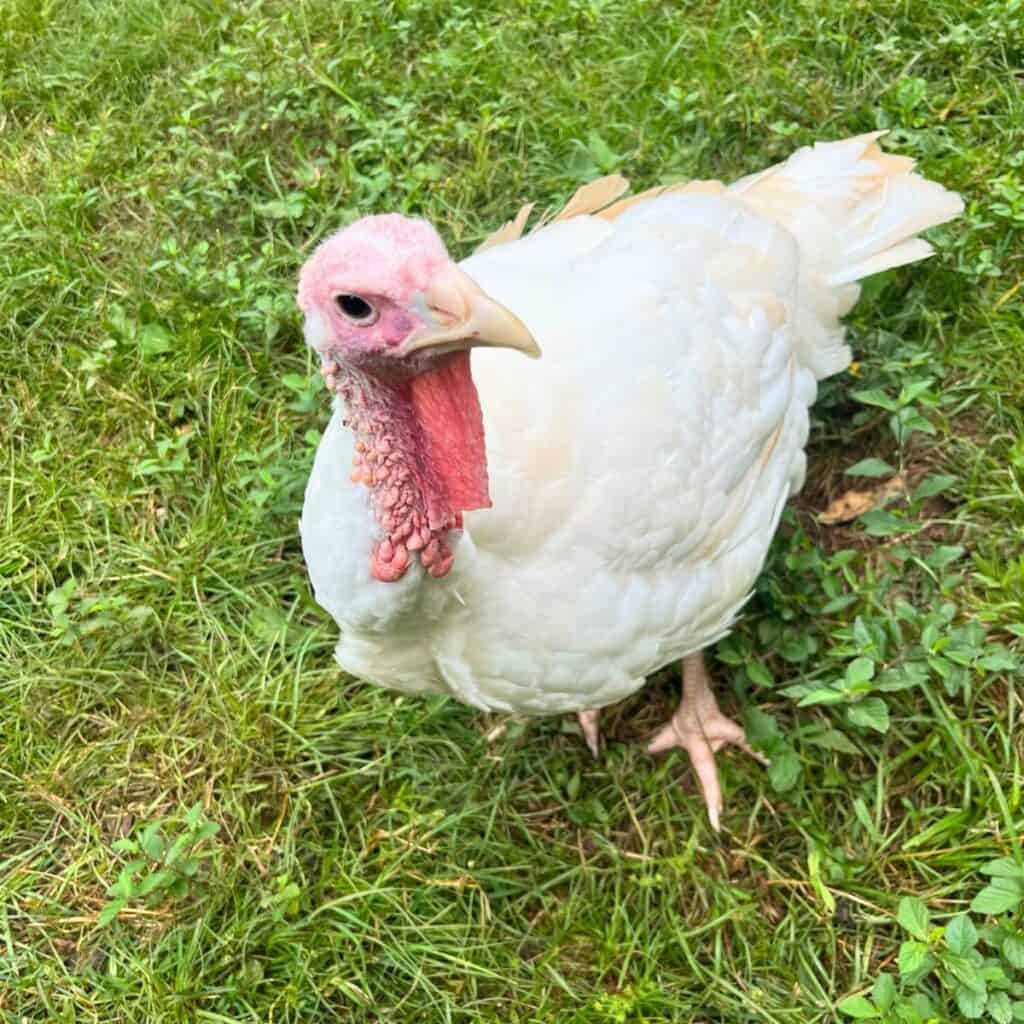
First, I just want to say that the farm is my favorite place to be. I love being surrounded by my family, the sweet farm animals, and the wide open space. But even so, we still like to take family trips.
But once you get farm animals, you have a responsibility to ensure their wellbeing. So how can you take time away from your farm or homestead while also making sure your animals are OK?
You could ask a friend to watch your animals, but that is a really big ask and they might not always be available.
The best thing to do would be to set up your farm so that you can leave for several days or more. I’ll share what we do on our farm, the tools we use, and how we set ourselves up so that we can leave for vacation.
This post contains affiliate links, which means I make a small commission at no cost to you. See my full disclosure here.
What setup do you need to leave the farm?
The setup you need to leave the farm involves getting the right feeders, waterers, fencing, shelters, and guardian animals to suit your individual needs.
I’m sharing what we do on our farm to keep our cows, chickens, and turkeys safe and happy while we’re away.
- Keep a guardian livestock dog or two.
- Put up permanent fencing and gates.
- Set up automatic waterers.
- Install automatic or gravity-fed feeders.
- Get a calf for your dairy cow.
- Keep good roosters to guard the hens.
- Set up shelters to suit your needs.
- Install security cameras…just in case.
1. Keep a guardian livestock dog or two.

The most important asset we have on our farm are guardian livestock dogs. They are worth their weight in gold!
We’ve had Sugar (a Great Pyrenees) since 2016 and Sadie (an Australian Shepherd) since 2020. We got both of them before moving to our farm.
I won’t lie to you. It was a struggle in the beginning while we were training them and they attacked the chickens and ducks.
Not all guardian livestock dogs will work out on your farm and learn to protect rather than harm the farm animals. I say it’s about a 50% chance that most dogs can work on a farm.

If you don’t already have a guardian livestock dog, check out your local animal shelter. Chances are they have some breeds that would do well. In our experience, females are better with farm animals than males.
And it doesn’t necessarily have to be a puppy. I’ve found that grown dogs are just as likely to learn how to be a guardian as puppies who grow up on a farm and are trained the exact same way.
If a dog doesn’t learn after a year of consistent training, you will have to sell them or give them away to another family that doesn’t keep farm animals.
2. Put up permanent fencing and gates.

Perimeter fencing and cross fencing provide barriers for animals.
Our turkeys and chickens go over fencing regularly, but fencing still provides a barrier to keep our animals in and predators out. If you keep cows, goats, pigs, and other medium to large animals, you need sturdy fencing and gates. You might also need to electrify the fencing to really keep them in.

We have tried portable electric fencing in the past, but not with great success. I’m a fan of rugged permanent fencing. Most of our farm has galvanized metal fencing and wood or metal posts planted deep in the ground. And that’s what works the best for us.
3. Set up automatic waterers.

For an extended absence, you need to have some automatic waterers set up with float valves so that your animals stay hydrated. Metal float valves are your friend!
I like using smaller galvanized tubs for the dogs, turkeys, and chickens to drink out of. They all share the same water tub and that helps keep parasite loads down or nonexistent between the species. We have two small tubs like this that we use for the smaller animals.

If you don’t have water lines throughout your farm yet, you may need to simply run a hose from an outdoor faucet on your home to your water trough. Unless, of course, you have a running stream or creek or pond for them to drink out of.
We get surprise baby chicks pretty regularly, and it’s easier for them to take a drink from a shallow water container. So we also have several portable plastic waterers that are close to the ground. But most of the time the animals drink from the water trough that’s hooked up to the faucet.

If you keep cows and other large farm animals, it’s important to have larger water troughs for them in their pastures.
Now, this doesn’t need to be anything fancy. We use cheap or free empty protein tubs in various places on our farm. Just drill a float valve onto them, hook them up with a hose run to your nearest faucet, and you’ll be good to go! Just be aware that some protein tubs are better than others. Some are sturdy and others are too thin and will crack.

We also use large traditional water troughs.

If you can afford the galvanized metal water troughs, they work out much better than the hard plastic water troughs. We’ve had a couple of the large, black plastic water troughs spring a leak on us that we had to repair with a plastic welder gun. The plastic welder also works when the smaller plastic water containers crack.
4. Install automatic or gravity-fed feeders.

One of the secrets to raising livestock for cheap is to let them free range and not feed them 100% of their diet in purchased grains.
If you haven’t read my article on how we raise livestock for cheap, I go deep in that area. I also wrote about how we raise chickens for cheap if that’s more your thing.
But even with being free-range, we still give our chickens and turkeys kitchen scraps and some feed they can scratch around for. Battery-powered deer feeders are a neat option because you hang them up and they sling out grain for as long as you set the time and frequency for.
I’ll admit…even though we have two of these deer feeders hanging up on our farm, the chickens and turkeys would still rather free-range for bugs and seeds than get the feed that drops to the ground.
Another option is to have large gravity-fed feeders. This OverEZ chicken feeder holds a 50-pound bag of chicken or turkey feed. I like that it holds so much and that there are three holes for the chickens and turkeys to eat out of.

But again, while our turkeys and chickens have access to this feeder, and do occasionally eat from it, they still prefer to catch their own food around the farm. I don’t see many flies, frogs, grasshoppers, slugs, or crickets.

You can also get chicken feeders that you set anywhere on the ground. These options are great for the mama hens who are feeding their babies.
And don’t forget about your guardian livestock dogs.

Wherever your guardian dogs sleep is where you want to set up a gravity-fed feeder for them. Our dogs like to sleep on our carport because they don’t have access to our porch.
These gravity-fed deer feed stations are great for holding dog food. They’re up off the ground, which keeps ants out, and the chickens and turkeys rarely get a chance to sneak a bite since the dogs hang out there most of the day when we’re gone.
5. Get a calf for your dairy cow.

If you keep a dairy cow, it’s important to also keep a calf on hand to nurse on her when you’re away or just need time off.
This is sometimes easy and sometimes tricky. If your mama cow has just had her own calf, there won’t be any problem leaving them together while you’re away.
If, however, her calf is older and has been weaned off of her, you’ll need to buy a bottle calf and graft it onto your mama cow before your trip. That’s what we had to do a few times. It takes a good 2 to 4 weeks of consistent work to graft a new baby onto your lactating cow, but usually it’ll turn out just fine.
Bottle calves are pretty expensive at auctions. See if any of your local farm friends know of any bottle calves for sale near you.
You can also check Facebook for bottle calves, but BE EXTREMELY CAUTIOUS and never EVER pay for an animal until you actually see it and have it in your possession. There are a lot of scammers who would love to take advantage of you online.
6. Keep good roosters to guard the hens.

Good roosters will protect the hens and be vigilant about watching the skies during the day and the coop door at night.
Guardian livestock dogs have their place on your farm, but so do good roosters. Make sure you’re keeping the good ones and harvesting the other roosters.
Our free range chickens wander all around our farm and a loyal rooster is always along to keep watch and potentially fight off predators.
7. Set up shelters to suit your needs.
Not all animals need shelter…like cows. But if you keep backyard chickens or other small animals, you might need to have a shelter to keep them safe at night.
Now this does not need to be anything fancy or expensive. We made an a-frame chicken coop out of salvaged material when we first moved to our farm 5 years ago, and it’s still going strong.

8. Install security cameras…just in case.
If you have access to the internet, security cameras are a great and useful tool on the farm. Especially when you have to leave.
We have used a couple different types of security cameras. We have a monitored plan but also bought a separate camera system to monitor our house and different angles of the farm. It’s a comfort to be able to watch the live feed from anywhere just with our smart phones.
Blink has a popular wireless security camera system and the monthly fee is reasonable.
Peace of mind is valuable. Being able to see that the animals and farm are fine helps eliminate stress when you’re on vacation! In the worst case scenario, the police are just a phone call away.
A day or two before leaving…
Before leaving to go on vacation, make sure your systems are all working properly. The waters should be working perfectly and the feeders should all be full before you head out.
With time and experience, it will get easier for you to leave your farm or homestead. And try to keep animals that are relatively low maintenance in the first place. I love not having to worry about our farm when we’re away.
I hope this article helps you enjoy the farm and family vacations, too!
Shop This Post!
Plastic chicken feeder, 11 pound capacity
Large gravity fed feeder, 50 pound capacity
Gravity-fed deer feed stations
Pin It For Later

Great tips! We have chickens and rabbits at this time and can use some of these tips!
I’m happy to help, Kayla!
Love, Rebekah
This is a great post. Very informative and much needed for anyone thinking about starting out on a farm. It is good to know what would be needed in the time you need to leave for a vacation or trip.
Thank you for your comment Pat!
Love, Rebekah
Great tips! Leaving the farm can be a challenge so having a good set up definitely helps.
Thanks Jennifer! I agree that leaving can be challenging. While every farm and homestead is different, our setup has worked for us.
Love, Rebekah